
NOTABLE MEDIA & PUBLICATIONS
Pier Carlo Talenti, Damian Stamer Paints with Intelligence, Artificial and Human, Art Restart, Thomas S. Kenan Institute for the Arts, November 21, 2025.
Courtney Napier, The Beauty of Change: Artist Damian Stamer, WALTER Magazine, November 2021.
Lauren Piemont, In Ephemeral Watercolors, Damian Stamer Finds the Secret Histories and Fading Futures of Rural Places, INDY Week, October 15, 2019.
Artist Damian Stamer, PBS / My Home, NC, October 16, 2018. Television profile.
Claire Gibson, Damian Stamer: Painting the Past, Garden & Gun, April/May 2016.
Erica Ciccarone, Damian Stamer and the Nuance of Memory at Sherrick & Paul, BURNAWAY, February 2015.
Damian Stamer, New American Paintings, No. 112: South Region, June 2014. Selected by René Morales, Curator, Pérez Art Museum Miami.
EXHIBITION ARCHIVE
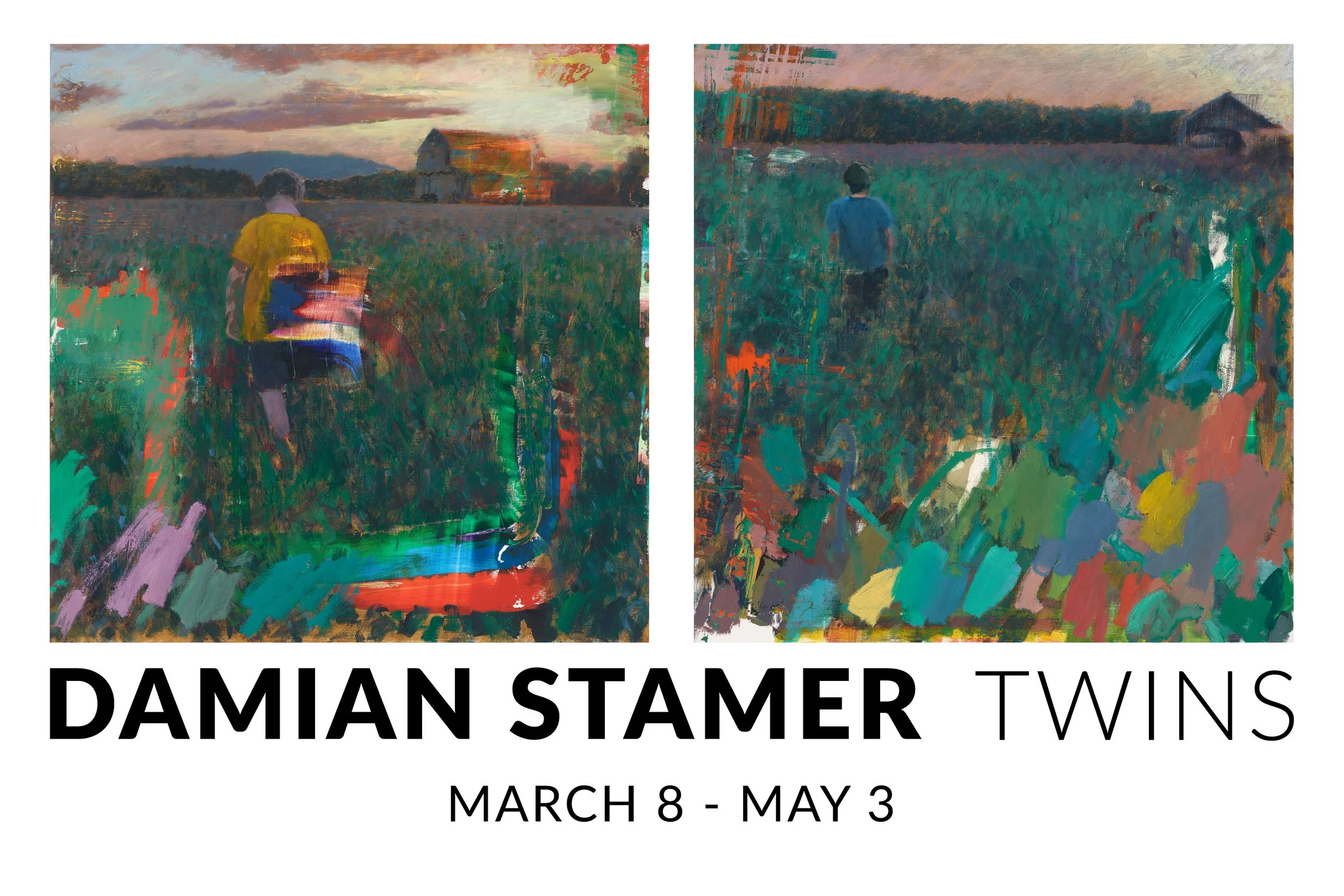
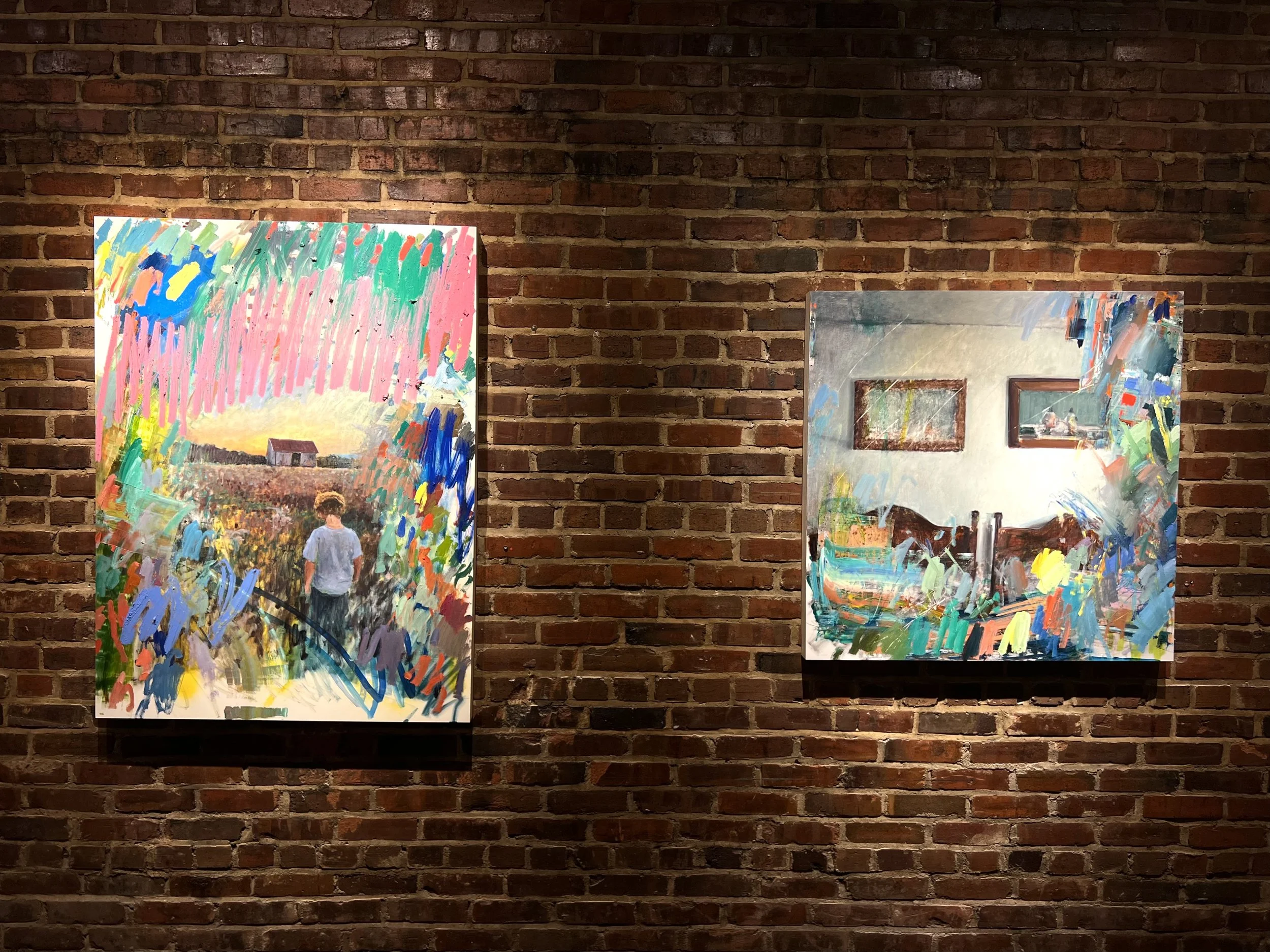
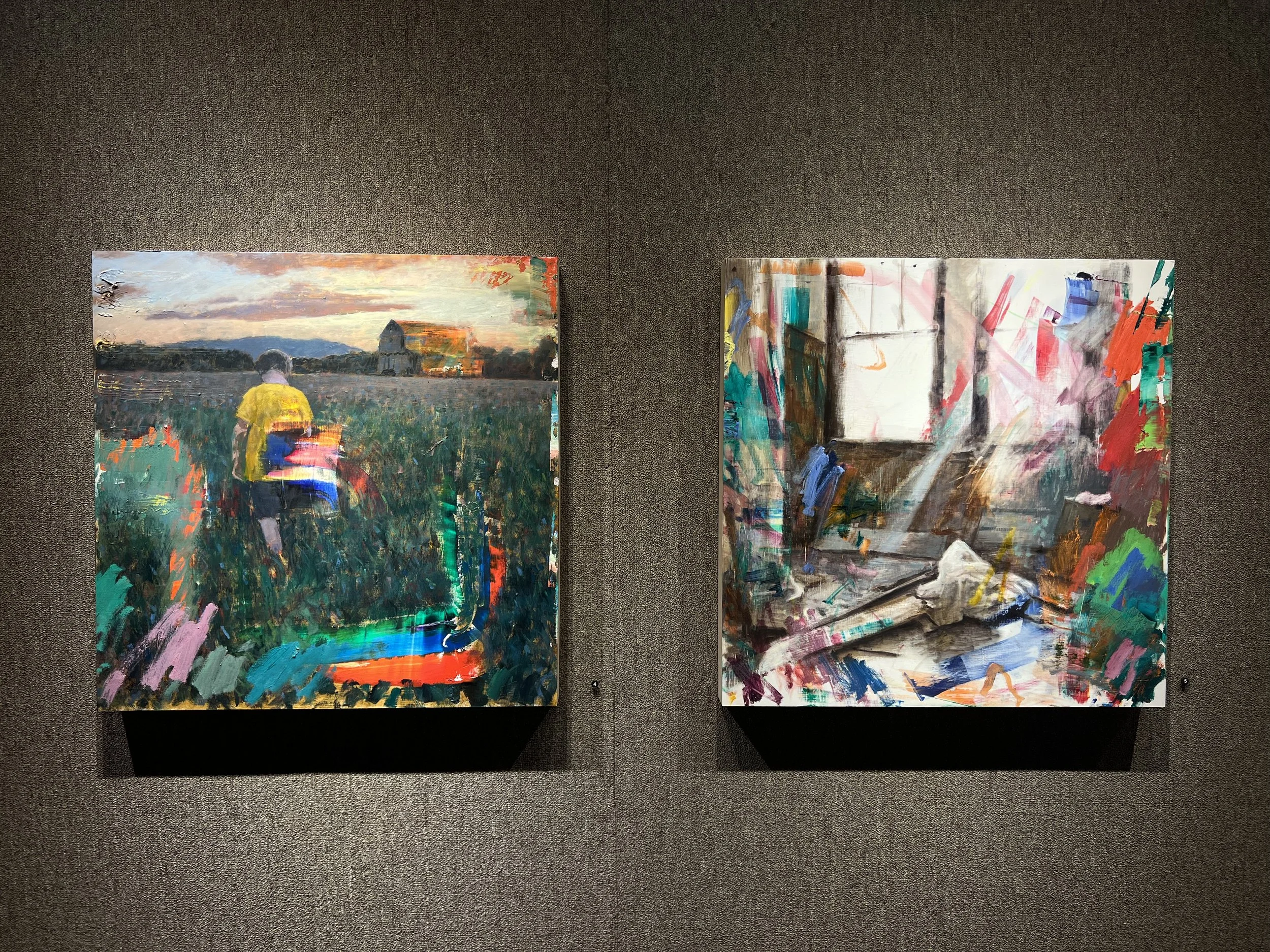
Twins
March 8 - May 3, 2025
Twins features a selection of paintings exploring Damian Stamer’s life as an identical twin, and how that identity intersects with his experience of memory and place. “I have long experienced the subtle dance between mirror and self—a relationship marked by both profound similarity and unique divergence” he explains. “This exhibition transforms that lifelong dynamic into a visual exploration that delves into the psychological depths of what it means to see oneself in another.”
Stamer continues his practice of using Artificial Intelligence as part of his artistic process. To supplement his own memory of a scene, he will input a text description of a moment from his childhood as he recalls it into an AI program, generating images that range from the familiar to the uncanny. Using these as inspiration, Stamer paints in oil on board with his unmistakable brushstrokes, beginning as sweeping gestural marks at the edges of the composition that come together to form expertly rendered interiors and landscapes.
Stamer says his paintings “… are layered conversations between organic memory and digital possibility, inviting viewers to contemplate not only the intimate bond between twins but also the broader dialogue between human creativity and emerging technology.”
Damian Stamer has quickly become one of the region’s most important artists, with paintings in notable museum, corporate and private collections. Museum exhibitions include Ruminations, a solo show at the Gibbes Museum in Charleston; Altered Land at the North Carolina Museum of Art, and Area 919 at Duke University’s Nasher Museum.
STATEMENT
Twins is a deeply personal meditation on duality, reflection, and the unseen layers that define our identities. As an identical twin, I have long experienced the subtle dance between mirror and self—a relationship marked by both profound similarity and unique divergence. This exhibition transforms that lifelong dynamic into a visual exploration that delves into the psychological depths of what it means to see oneself in another.
The creative process behind Twins is as much about collaboration as it is about introspection. I began by entering a childhood memory containing the word Twins into DALL·E 2, an AI image generator, to produce reference imagery that resonates with the abstract and multifaceted nature of duplication. These images, emerging from an algorithm’s unpredictable interpretation, provided me with a reservoir of visual cues that oscillate between the familiar and the uncanny. They serve as the initial spark that informs each painting I create. Similarly, the title of each painting contains the prompt that created its reference image.
In reinterpreting these digital renderings onto panel, I embrace both meticulous technique and the spontaneity inherent in working with AI-generated forms. This dual approach mirrors the twin experience: one part deliberate human expression, the other part the unpredictable reflection of machine learning. The resulting works are layered conversations between organic memory and digital possibility, inviting viewers to contemplate not only the intimate bond between twins but also the broader dialogue between human creativity and emerging technology.
Twins thus becomes a metaphor for the multiplicity of identity in the digital era. It interrogates how our internal landscapes—shaped by shared histories, intimate bonds, and personal memories—are simultaneously mirrored and transformed by the external forces of technological innovation. In this series, the artist's deeply sentient and intuitive brushwork stands in stark contrast to the algorithmically driven, non-sentient suggestions of an AI collaborator, creating a space where human emotion and digital computation converge and transform one another.
Engagement with these works encourages an exploration of the complex layers of selfhood, prompting questions about where one identity ends and another begins (as the boundaries between human and AI become blurrier by the minute). The reflective surface of every painted image reveals not merely a twin of some kind, but a portal to a deeper understanding of how identities are constructed in an increasingly interconnected, algorithmically influenced world.
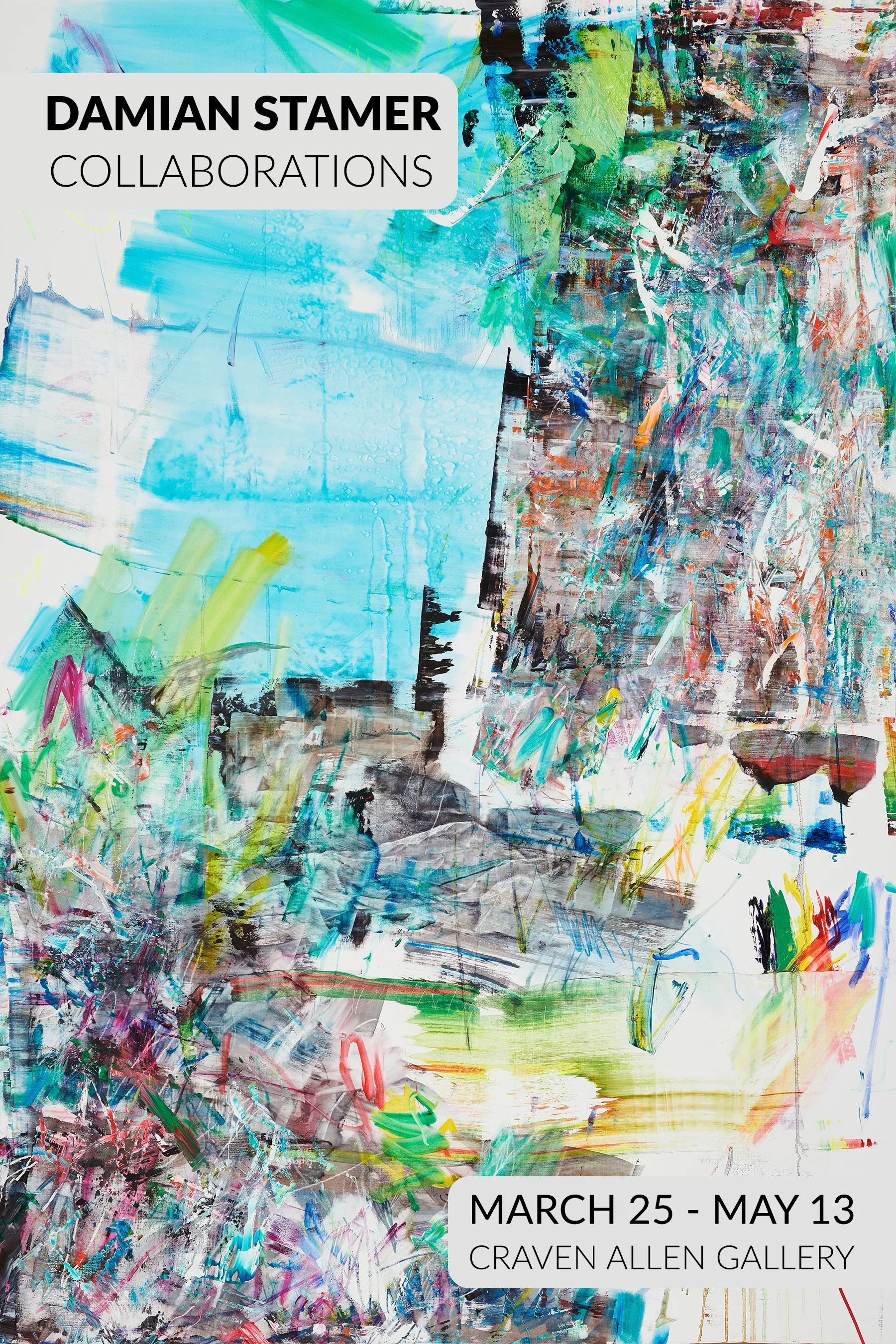
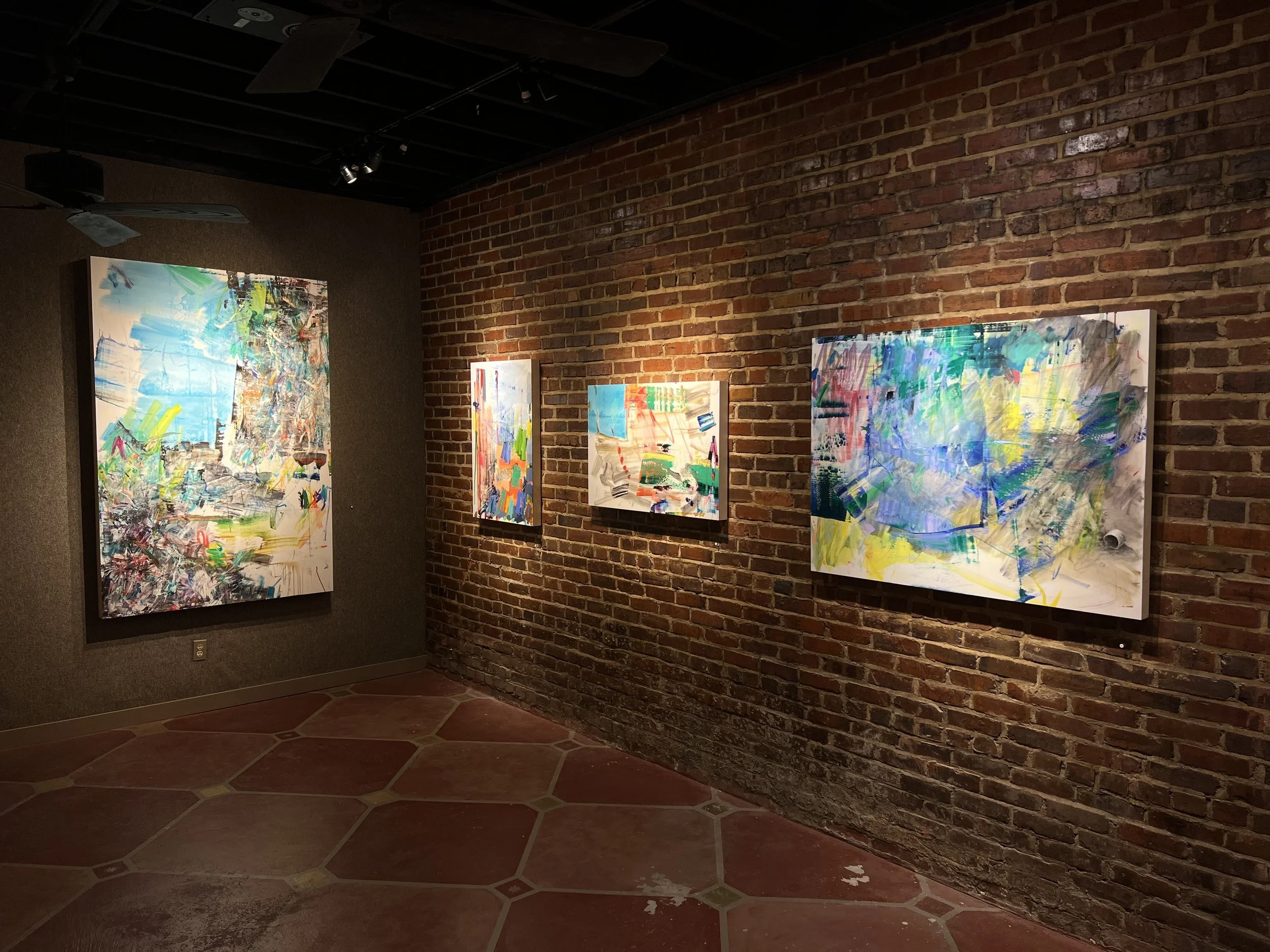
Collaborations
March 25 - May 13, 2023
Collaborations features both new paintings from Stamer's continued exploration of home, memory, and place as well as a new body of work created in collaboration with Artificial Intelligence. Instead of his traditional process of using photographs as source material, Stamer used an AI text-to-image generator to compile reference imagery. The resulting oil paintings are visually striking and raise timely questions about our relationship with the digital world.
STATEMENT
As an artist, I've always been drawn to the concept of home and the memories and emotions that come with it. For my exhibition titled "Collaborations", I continued this exploration by creating new paintings that delve into the complex relationship between memory and place. These paintings are deeply personal and invite the viewer to reflect on their own experiences with home and the passage of time.
In addition to my traditional source material, I also embarked on an exciting new collaboration with DALL-E 2, a text-to-image generator. The resulting body of work is a stunning series of oil paintings that blur the boundaries between the physical and the digital. By using AI-generated imagery as a reference, I was able to push the limits of my creative process and expand my artistic horizons in new and unexpected ways.
Through this collaboration with DALL-E 2, I sought to explore the fundamental questions of what it means to remember, to create, and to be human in our increasingly digital world. The resulting paintings are a thought-provoking commentary on the intersection of technology and creativity, and a testament to the power of collaboration to push the boundaries of artistic expression.
I hope that viewers of "Collaborations" will be inspired by the beauty and complexity of these works, and will come away with a renewed appreciation for the boundless potential of human creativity, both alone and in collaboration with technology.
- ChatGPT (in response to prompt by the artist)
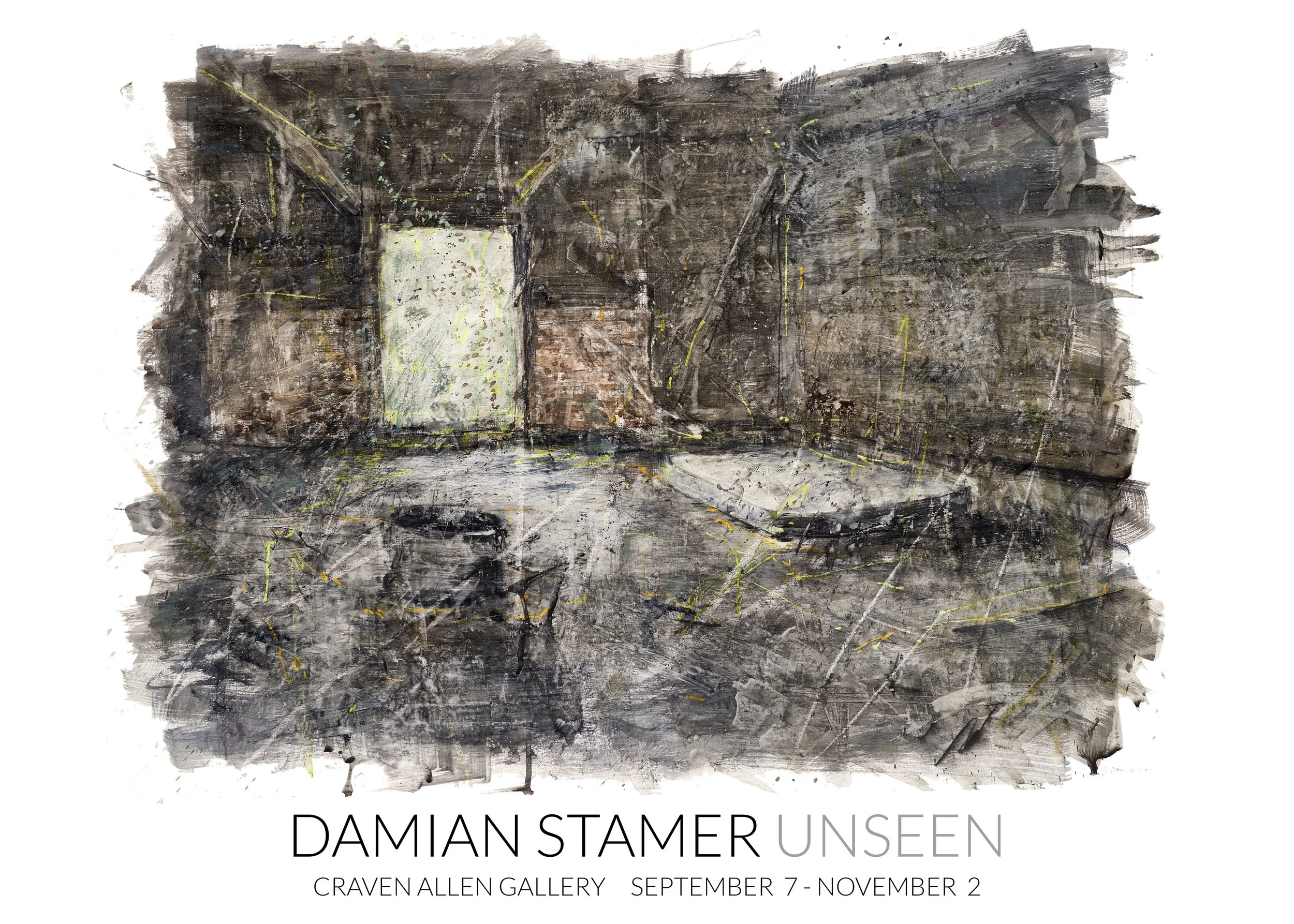
Unseen
September 7 - November 2, 2019
Unseen marks Damian Stamer’s first show exclusively of works on paper--intimate in scale, and expansive in scope. The show features haunting landscapes and hidden interiors of his native North Carolina in various media, including watercolors and works which combine painting, drawing, and a variety of printmaking practices.
Experimenting with perspective, images of the familiar may appear faint from a distance while their surfaces coalesce into chaotic lines. Constantly evolving technique, his process borrows from abstraction, minimalism, realism and sometimes trompe l’oil.
For Stamer, Unseen refers not only to this new body of work in a new medium, but also to the idea that “…these ruins also represent a past and present I too often did not see. The centuries-old industries that brought many of these picturesque barns were built upon slavery, oppression, and denial of human rights.”
“I am shaken by an old barn’s history, yet I find beauty within it,” says Stamer. “Time is visible here. Quiet moments near the sublime when afternoon light rakes the grain of a fallen beam, or cloud-like stuffing erupts from a rotten chair. Violent and tender, this beauty hinges on the delicate nature of existence. These remnants are, like us, soaked with impermanence. We cannot escape a similar fate. I depict these icons of the Carolinas not to monumentalize, but rather to question my identity embedded and reflected within them. Nostalgia, sentimentality, naiveté, violence, loss, guilt, fragility, and complicity coexist, and can prove difficult to reconcile. What else can I still not see?”
STATEMENT
I paint places close to home, barns and abandoned buildings. As adolescents, my twin brother and I rummaged through rooms pregnant with secrets, inspecting forgotten objects in search of hidden treasures. Moldy mattresses whispered of sex, drugs, and shelter from the winter cold. Adrenaline of discovery often mixed with the fear of being discovered. Even today, standing in these seemingly empty places, you never know if someone had been here twenty years, or twenty minutes ago.
I am undoubtedly comforted by this landscape. However, despite my numerous positive memories, these ruins also represent a past and present I too often did not see. The centuries-old industries that brought many of these picturesque barns were built upon slavery, oppression, and denial of human rights. Although transgressions may be buried deep beneath the soil, some of the power structures that enabled them remain.
I am shaken by an old barn’s history, yet I find beauty within it. Time is visible here. Quiet moments near the sublime when afternoon light rakes the grain of a fallen beam, or cloud-like stuffing erupts from a rotten chair. Violent and tender, this beauty hinges on the delicate nature of existence. These remnants are, like us, soaked with impermanence. We cannot escape a similar fate.
I depict these icons of the Carolinas not to monumentalize, but rather to question my identity embedded and reflected within them. Nostalgia, sentimentality, naiveté, violence, loss, guilt, fragility, and complicity coexist, and can prove difficult to reconcile.
What else can I still not see?
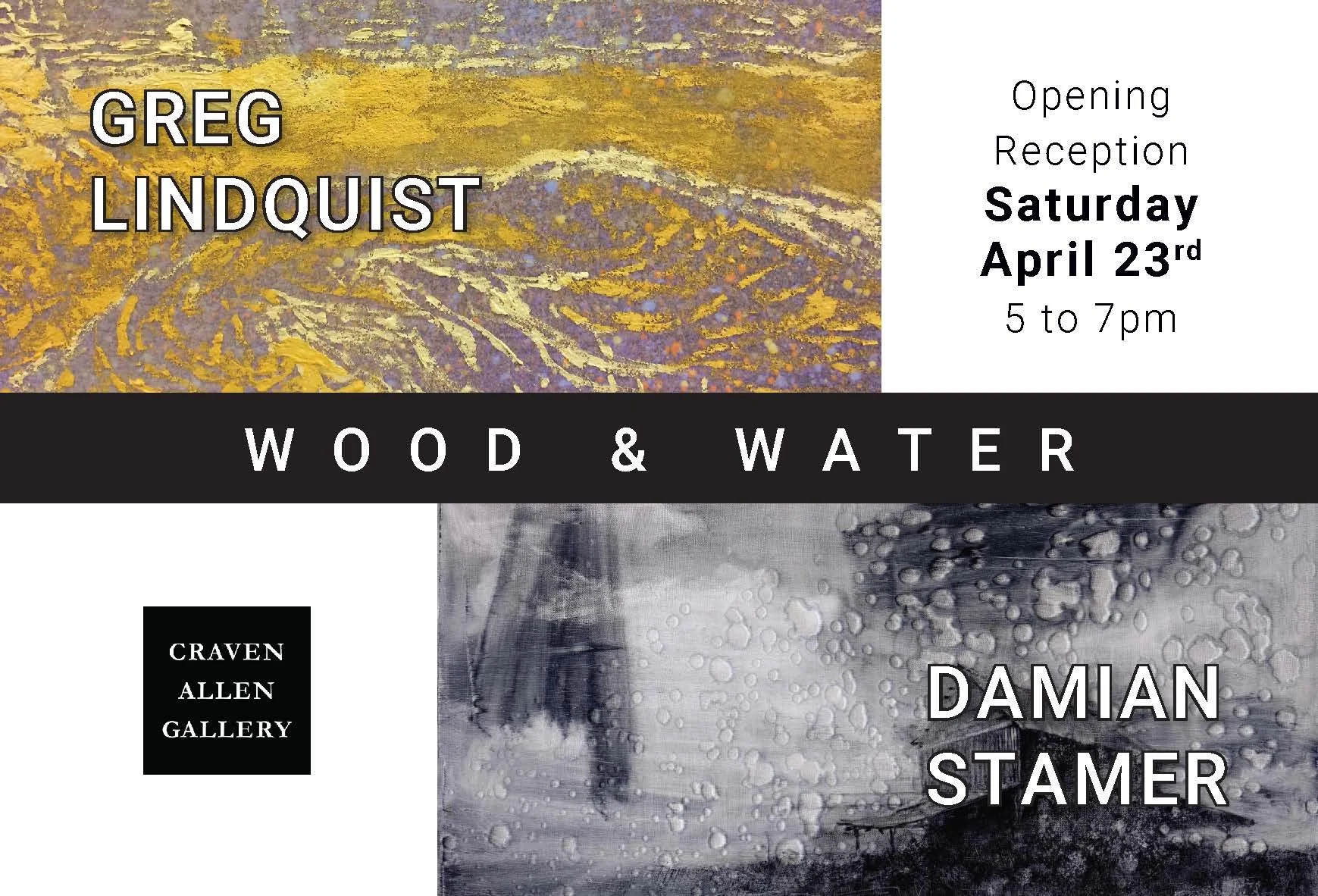
Wood & Water
April 23 - June 18, 2016
Wood and water are elemental, omnipresent, and inseparable from our daily lives. Edmund Burke, in Philosophical Inquiries to the Sublime (1757), wrote about the sublime quality in the vast expanses of water, yet the “wonders of minuteness” of its particles. Wood—a porous and fibrous structural tissue found in the stems and roots of trees--is the building block of human civilization, giving both fuel and shelter. These items of immense abundance and presence are acted upon by hyperobjects, a phenomenon that has been described by ecology writer Timothy Morton in his book of the same name. Transcending massive space and time, hyperobjects are a result of human intervention and history, our mark left on nature and the landscape.
The wood skeletons and structures of rural farm architecture have long been an inspiration for Damian Stamer, a native of Durham, North Carolina. These haunting landscapes of his native North Carolina reference memory, and our inability to clearly recall everything about a place and time. Experimenting with perspective, images of the familiar may appear faint from a distance while their surfaces coalesce into chaotic lines. Constantly evolving technique, his process borrows from abstraction, minimalism, realism and sometimes trompe l’oil. Stamer employs his advanced technical skills to represent a vague memory and idea, a blur of moments in time that overlap, confuse, and begin to erode.
STATEMENT
I keep returning to the places of my past over and over again, even though I never quite know exactly what I’m looking for. There is a comfort in familiarity, a sense of guardianship of childhood haunts. But darker stories also soak this soil, and my ruins are pregnant with secrets. Time passes slowly as things fall apart. Painting is the only way I know how to describe such a place, which exists more in my mind than here on earth.