
UPCOMING EXHIBITION
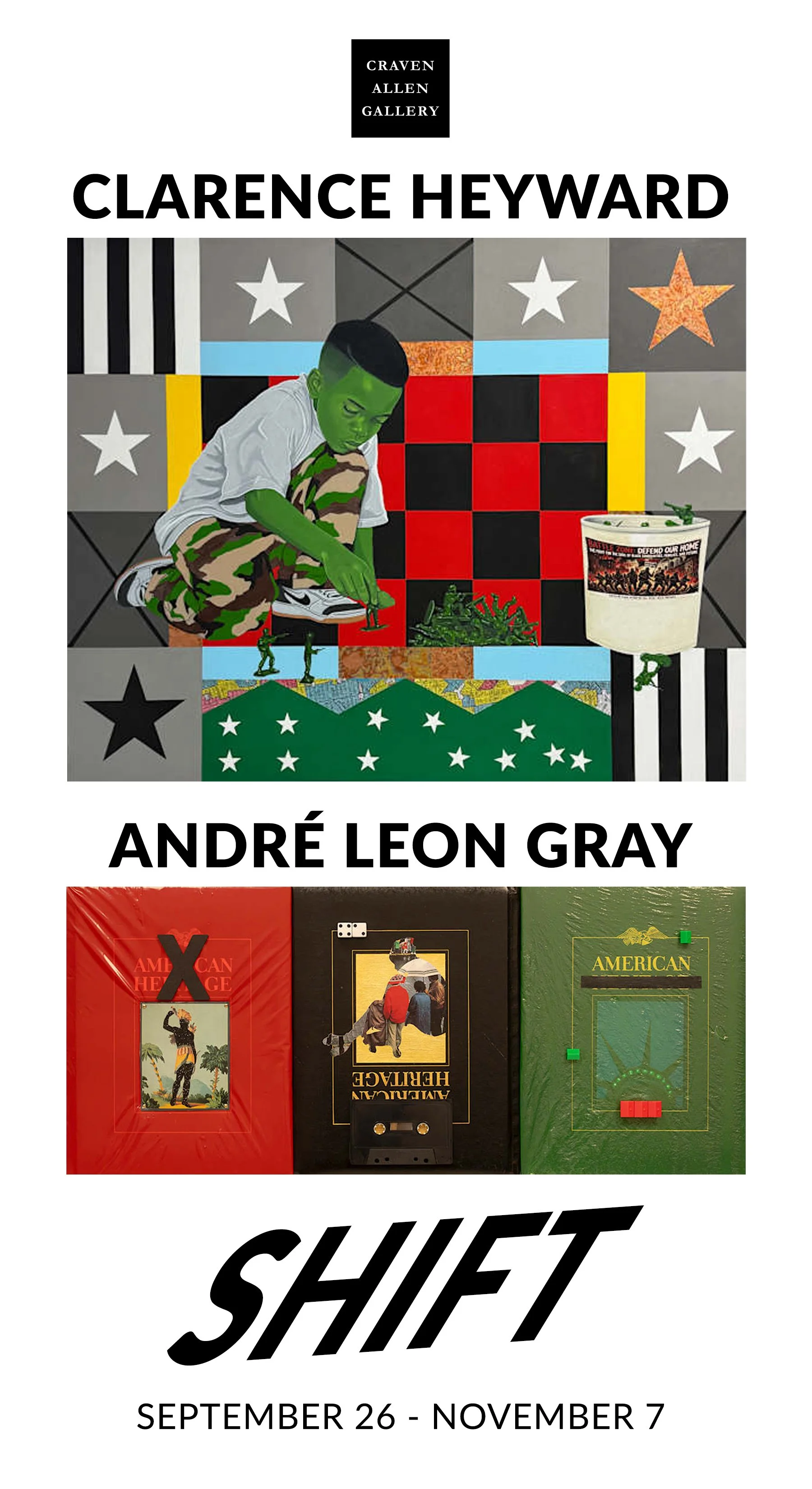
OPENING SEPTEMBER 26
RECEPTION 5-7PM
NOTABLE MEDIA & PUBLICATIONS
Derrick Bryson Taylor, Vandals Damage Work by Black Artist at Houston Museum, Officials Say, The New York Times, June 13, 2026.
Isa Farfan, Painting “Intentionally” Defaced at Museum of African American Culture, Hyperallergic, June 11, 2026.
Clarence Heyward, Let’s Talk Durham, April 23, 2025. Artist interview.
Points South Live: Clarence Heyward and Jenn Wasner, Oxford American, September 23, 2022. Artist conversation and podcast.
Addie Ladner, Clarence Heyward Unveils Powerful New Work at CAM, WALTER Magazine, 2022. Artist interview in conjunction with Unseen at CAM Raleigh.
Clarence Heyward and Tatiana McInnis, Make Work About It, Southern Cultures, 2022. Edited artist conversation.
Nasher Museum Podcast: Artist Clarence Heyward and American History Teacher Tatiana McInnis, Nasher Museum of Art at Duke University, 2022. Artist interview and podcast.
Charles Upchurch, A Man Fulfilled: Artist Clarence Heyward, WALTER Magazine, March 4, 2020.
EXHIBITION ARCHIVE
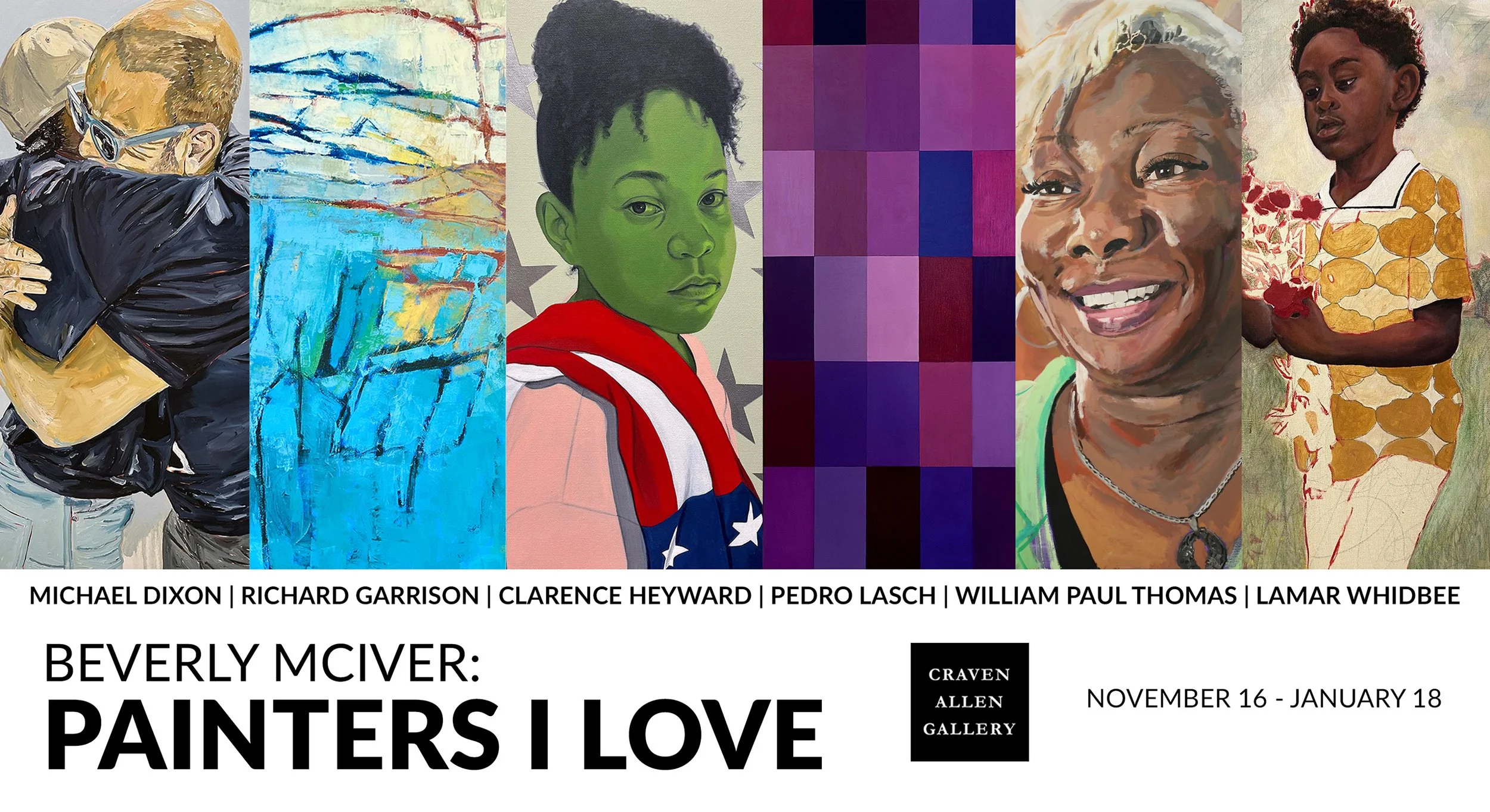
Beverly McIver: Painters I Love
November 16, 2024 - January 18, 2025
Painters I Love features works by Michael Dixon, Richard Garrison, Clarence Heyward, Pedro Lasch, William Paul Thomas and Lamar Whidbee. For this show, McIver selected artists that she believes are modern masters in the art of painting. “Michael, Richard, Clarence, Pedro, William and Lamar are members of my art family” she says, “they are very talented creatives, and we have all been longtime supporters of each other.”
The exhibiting artists paint in a variety of styles, from figurative to non-representational. The common thread in their work, McIver explains, is that “they are not afraid to be vulnerable when creating, they enjoy expressing a bit of humanity through paint. We all understand that our craft is our first love, and we will support each other unconditionally.”
As the guest curator, Beverly McIver says that her goal with this exhibition is to “invite viewers on a journey to explore relationships between friends and fellow artists, creating a harmonious voice about humanity and vulnerability.”
STATEMENT
Using painting as my primary tool of communication, I make works examining my identity as a Black American man, husband and father; compositions documenting my life experiences and how the media and historical documentation contribute to the perception of Black Americans and our collective culture. Much of my work is influenced by my memories which serve as a database filled with television shows, movies, music, and pop-culture which become metaphors and or references used in my compositions.
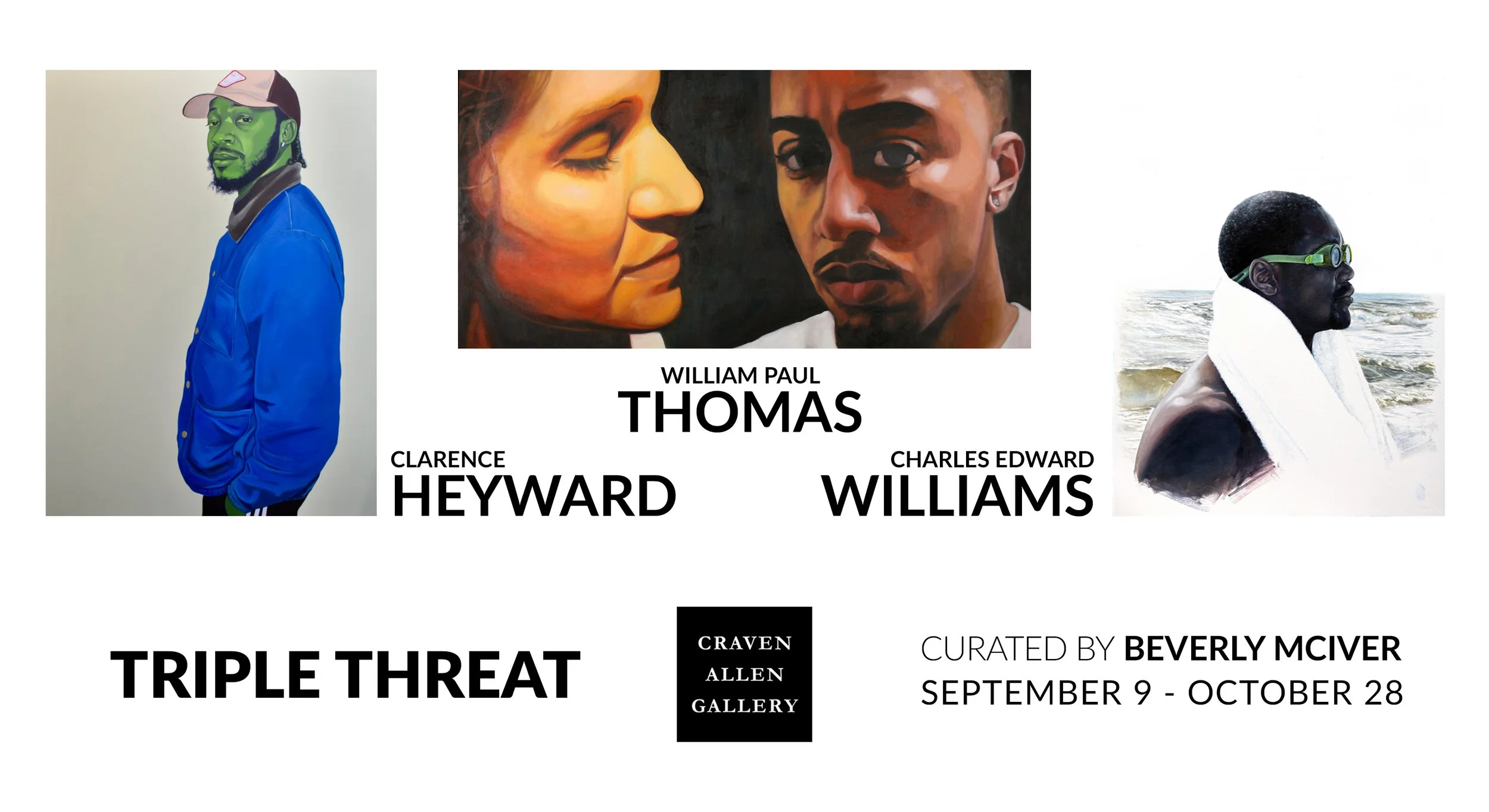
Triple Threat
September 9 - October 28, 2023
To call Clarence Heyward, William Paul Thomas and Charles Edward Williams emerging artists would be disingenuous. The three of them have seen tremendous success over the last several years; each has had museum shows, and their works are in significant public and private collections. But they are young and at the forefront of a new generation of Black painters in North Carolina, following in the footsteps of luminaries like Ernie Barnes and Beverly McIver. In fact, McIver, who strives to, as she says, “reach out to help bring others to the table,” is guest curator for TRIPLE THREAT.
All three painters were featured in Reckoning & Resilience, the Nasher Museum’s most recent survey of the best North Carolina artists working today. While their paintings all center on portraiture, each artist approaches their subjects from a different angle.
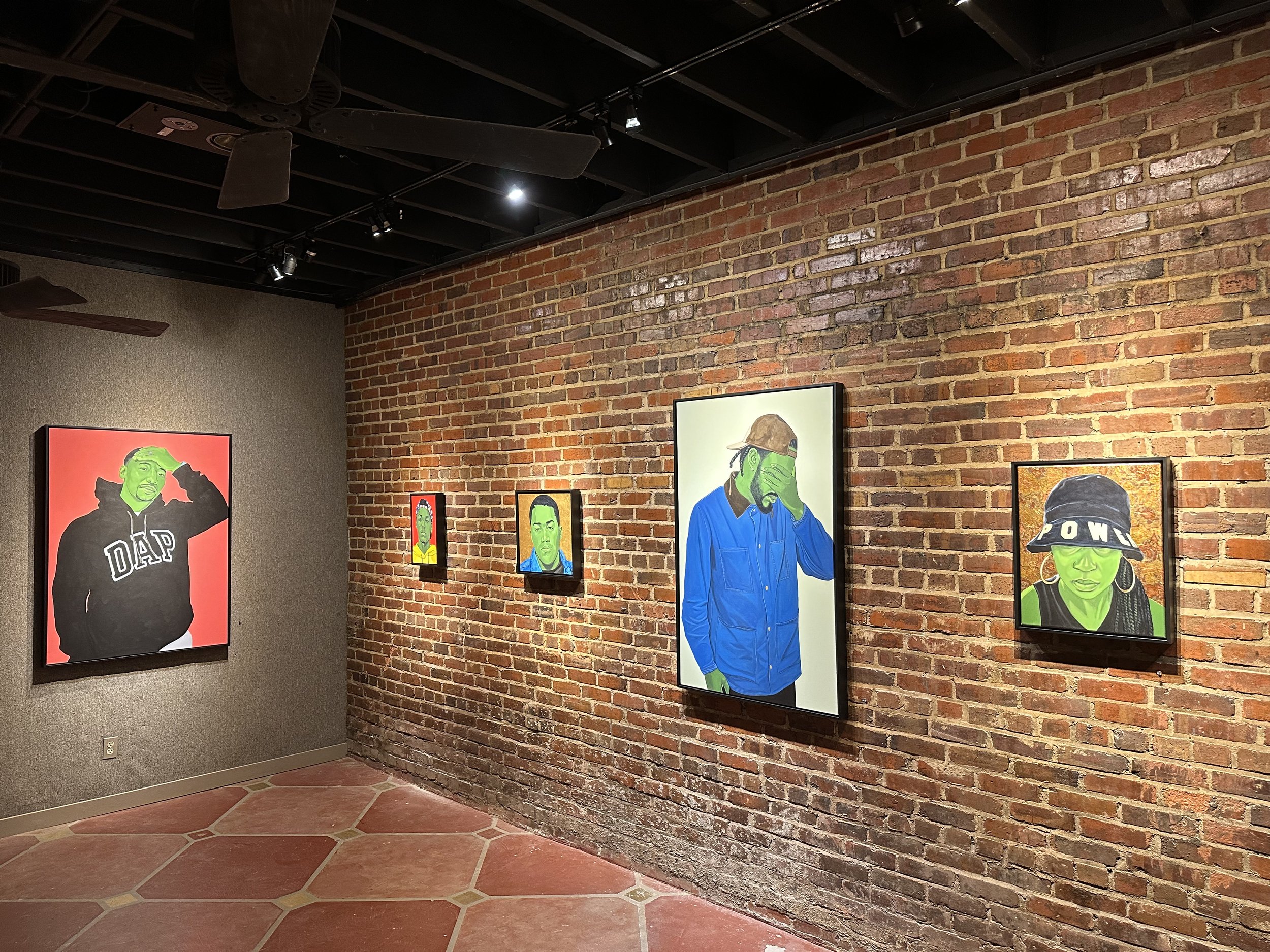
Clarence Heyward seeks to challenge stereotypes and myths about the Black American experience. Through a mix of self-portraits and portraits of others, Heyward explores both the presence and absence of Black Americans in history and contemporary media. Green skin is a recurring feature of Heyward’s subjects, evoking the green screen used by the film Industry for special effects, calling into question the ways in which the viewer may project their opinions and biases of the subjects depicted. Heyward’s paintings on panel are sometimes enhanced by gold leaf or other unusual materials, referencing pop culture in a bold, contemporary style.
STATEMENT
Using painting as my primary tool of communication, I make works examining my identity as a Black American man, husband and father; compositions documenting my life experiences and how the media and historical documentation contribute to the perception of Black Americans and our collective culture. Much of my work is influenced by my memories which serve as a database filled with television shows, movies, music, and pop-culture which become metaphors and or references used in my compositions.
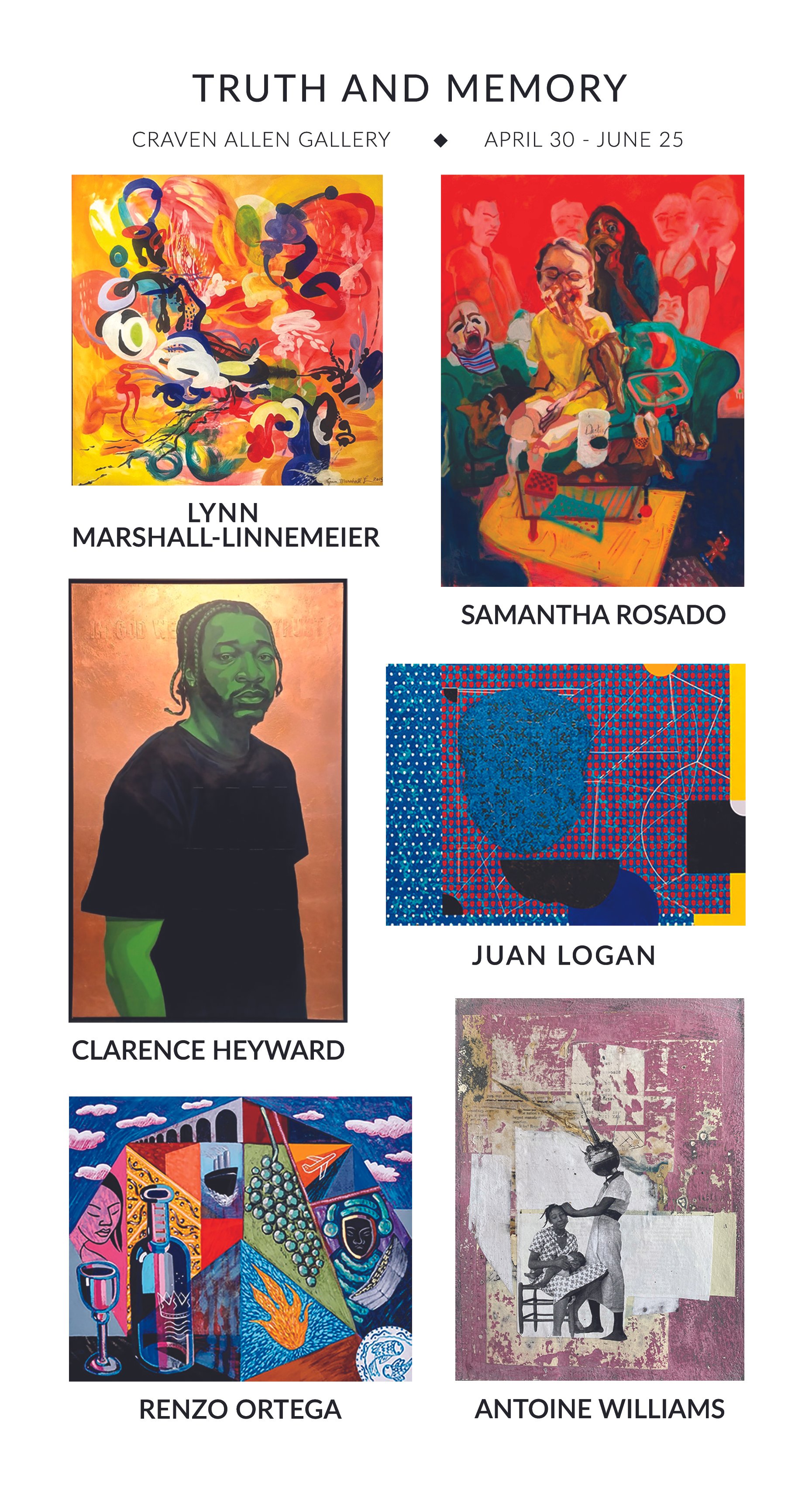
Truth and Memory
April 30 - June 25, 2022
Truth and Memory brings together the work of six contemporary artists of color living and working in North Carolina. Clarence Heyward, Lynn Marshall-Linnemeier, Juan Logan, Renzo Ortega, Samantha Rosado, and Antoine Williams range from well-established professionals to emerging talent. Collectively, their work reflects on and responds to personal, cultural, and historical memory.
Truth and Memory was conceived by artist Beverly McIver, and curated by McIver and three of her students at Duke University, Marie-Louise Bennett, Nzinga Simmons and Emily Xu, where she is professor of art.
As they write in their collective statement as curators, “Memory is central to identity formation. It forms how we define ourselves and our relationship to the world. It forges powerful bridges between the past and the present, enabling the bygone to infiltrate the contemporary.” Personal memory refers to an understanding of the past that has been experienced first-hand. Cultural memory refers to an understanding of the past that has been passed down generationally though oral traditions and other culturally specific customs. Historical memory refers to an understanding of the past informed by narratives about specific historical periods and events. Working both abstractly and figuratively, the artists presented in this exhibition create works that query and reflect on both personal and collective memories –– grappling with the ways in which the past continues to inform the present.
STATEMENT
My art practice challenges stereotypes and myths, takes on social commentary, critiques perceptions, and creates dialogues all through the lens of the Black American male experience. As a Black man, husband, and father living in America, my paintings draw from life experiences. It contains personal and collective narratives that position black bodies in the forefront and examines the reinterpretation of black existence in imagery addressing the notion of belonging, inclusion, our perceived presence and absence in America.