
UPCOMING EXHIBITION
OPENING NOVEMBER 14
RECEPTION 5-7PM
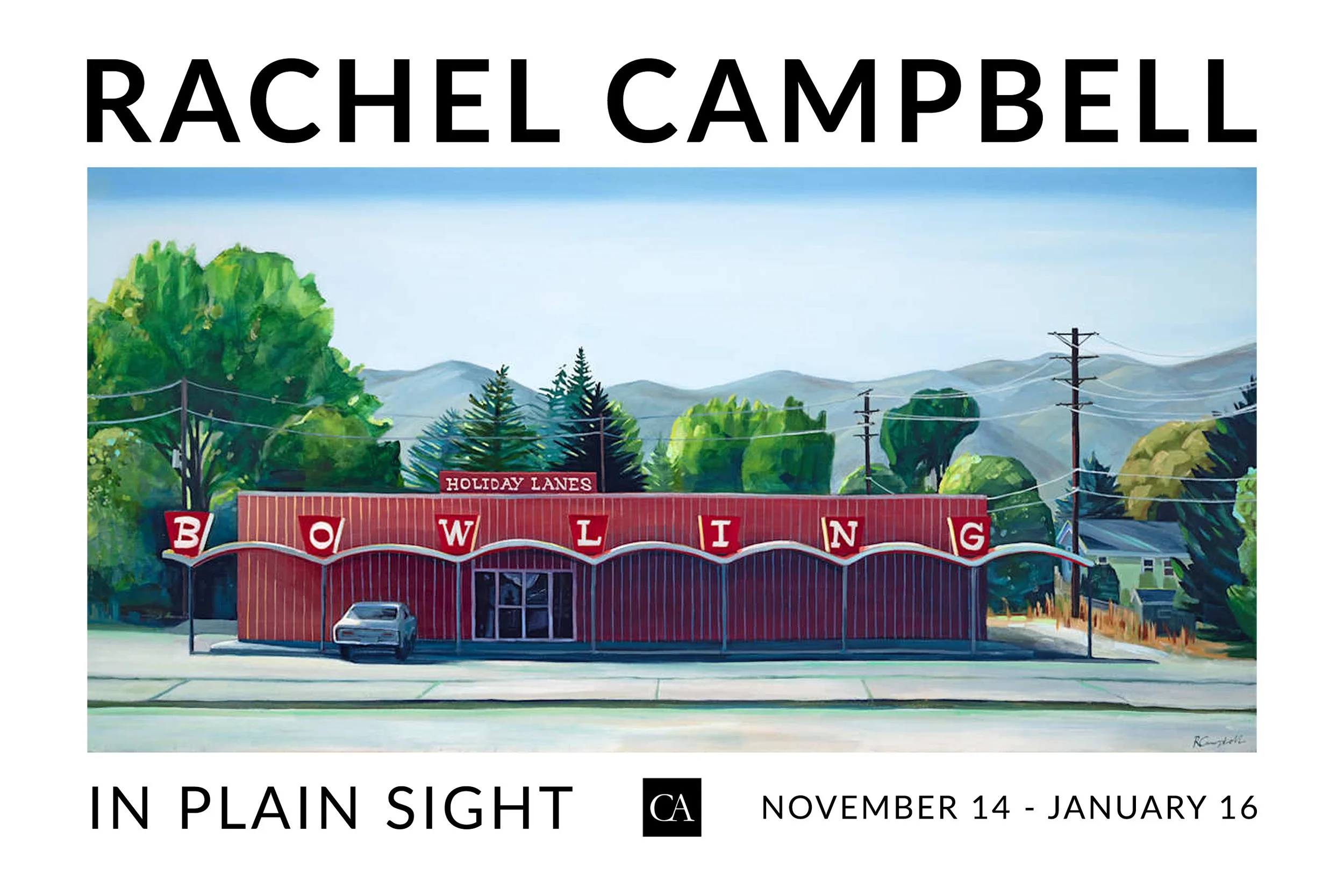
EXHIBITION ARCHIVE
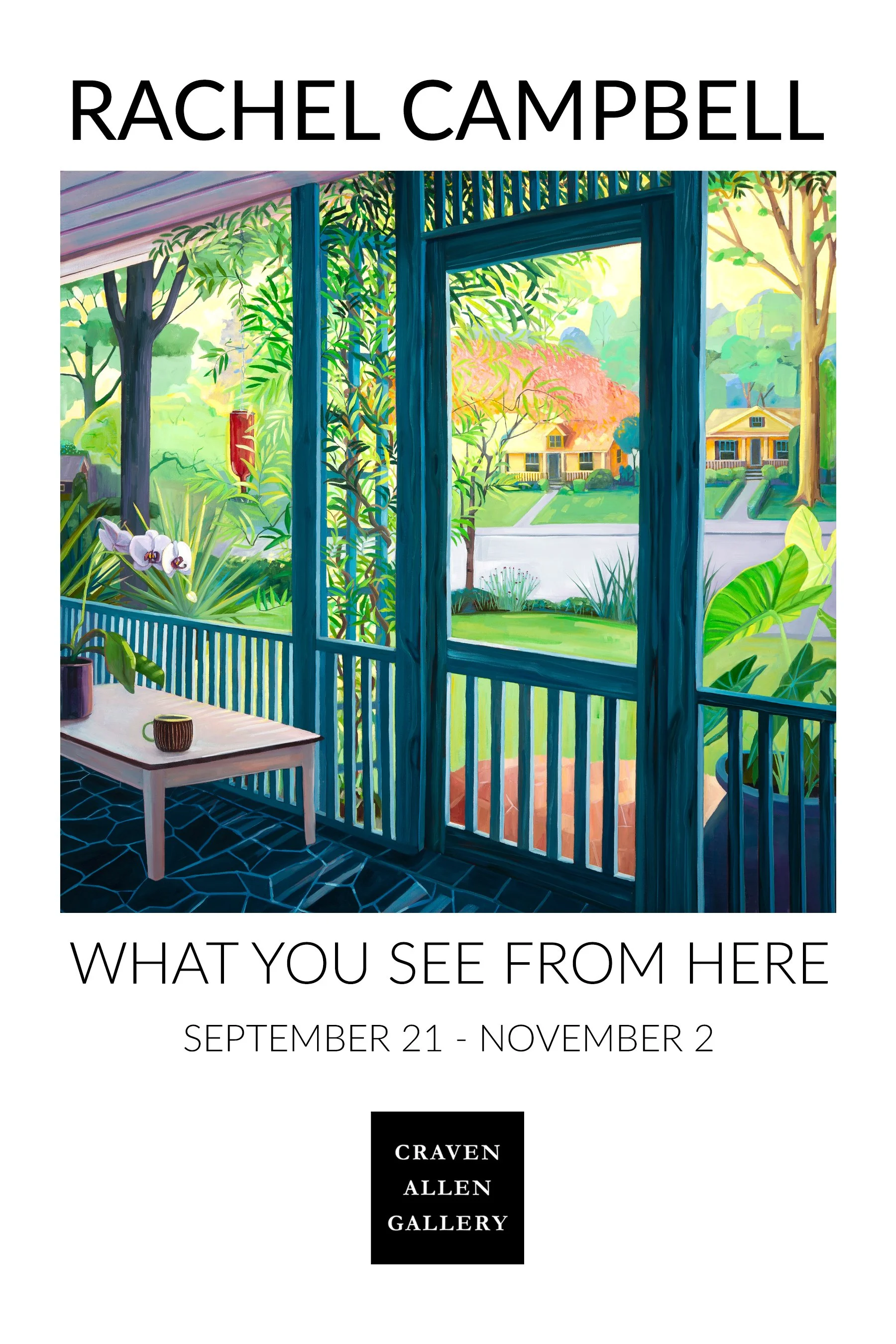
What You See From Here
September 21 - November 2, 2024
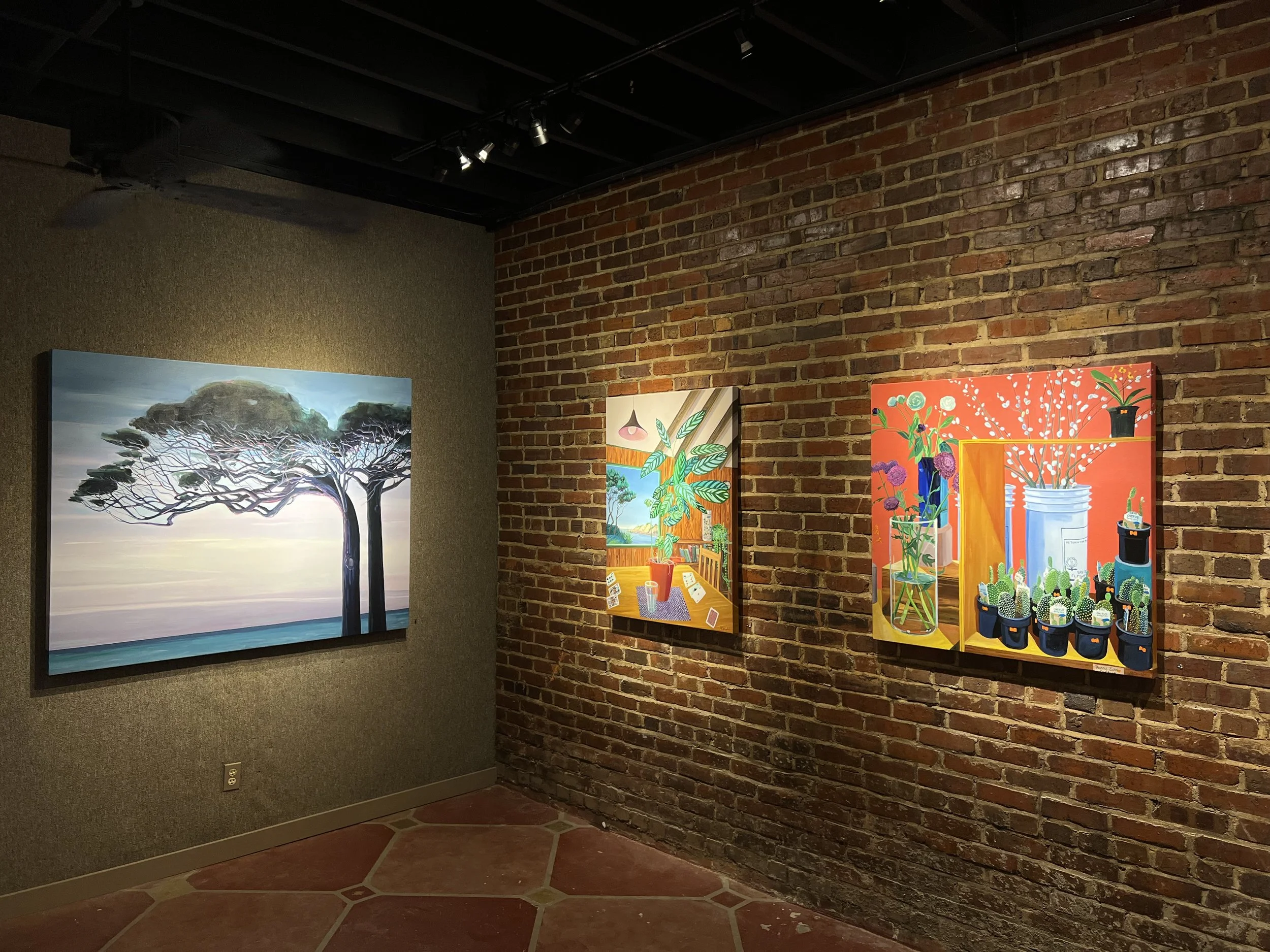
Born and raised in New Zealand, Rachel Campbell paints and shows her work all over the world but makes her home here in Durham. What You See from Here showcases new paintings, featuring scenes from Durham, New Zealand and Australia.
Rachel’s distinctive style makes use of bright colors and subtly distorted perspectives. “I choose to work in abstracted realism, painting recognizable places and objects that I manipulate through color and juxtapositions of flattened spaces against modeled forms. I broadly paint some areas and use graphic detail to lead the eye to the most important objects in the story. This style of painting allows me to play with composition, to create moods with color, and to give personality and life to inanimate objects” she says.
Much like David Hockney, her scenes are filled with a dynamic sense of life, luscious colors and often a sly sense of humor.
STATEMENT
Creativity was my escape during childhood and continues to be my salvation and delight.
I seek to reveal the beauty within the ordinary, hidden in plain sight, whether it be the delicious palette used by a friend in her living room, the view in front of me as I sit looking out from my front porch, or the intricate pattern on the leaves of the plants in my garden. My paintings express my gratitude for a life that is so abundantly rich and for which I am overwhelmingly thankful. In a world of frequent trauma, they strike a resilient note of playfulness and hope.
I find beauty in environments. I work in abstracted realism, painting recognizable places and objects that I manipulate through color, juxtaposing flattened spaces against modeled forms. I paint some areas broadly but use graphic detail to lead the eye to the most important elements. This flexible style allows me to play with composition, to create moods with color, and to give personality and life to inanimate objects.
I also find beauty in stories. Despite the absence of overt people, a human presence is always implied through the inclusion of things that they have left behind. My own memories and experiences often fuel these compositions, which are fleshed out with cherished details—a dog leash, a plant given to me by a loved one, my kitchen table. While the meaning of these personal elements may not be immediately evident, they invite viewers to make their own associations. Other people’s stories are touched, their memories stirred, and they leave encouraged to find the beauty and playfulness present within their own lives.
“If art isn’t playful, it’s nothing. Without play we wouldn’t be anywhere. Play is incredibly important; it’s deeply serious as well. It’s hardly a criticism of my work to call it playful; on the contrary, it is flattering!”
— DAVID HOCKNEY
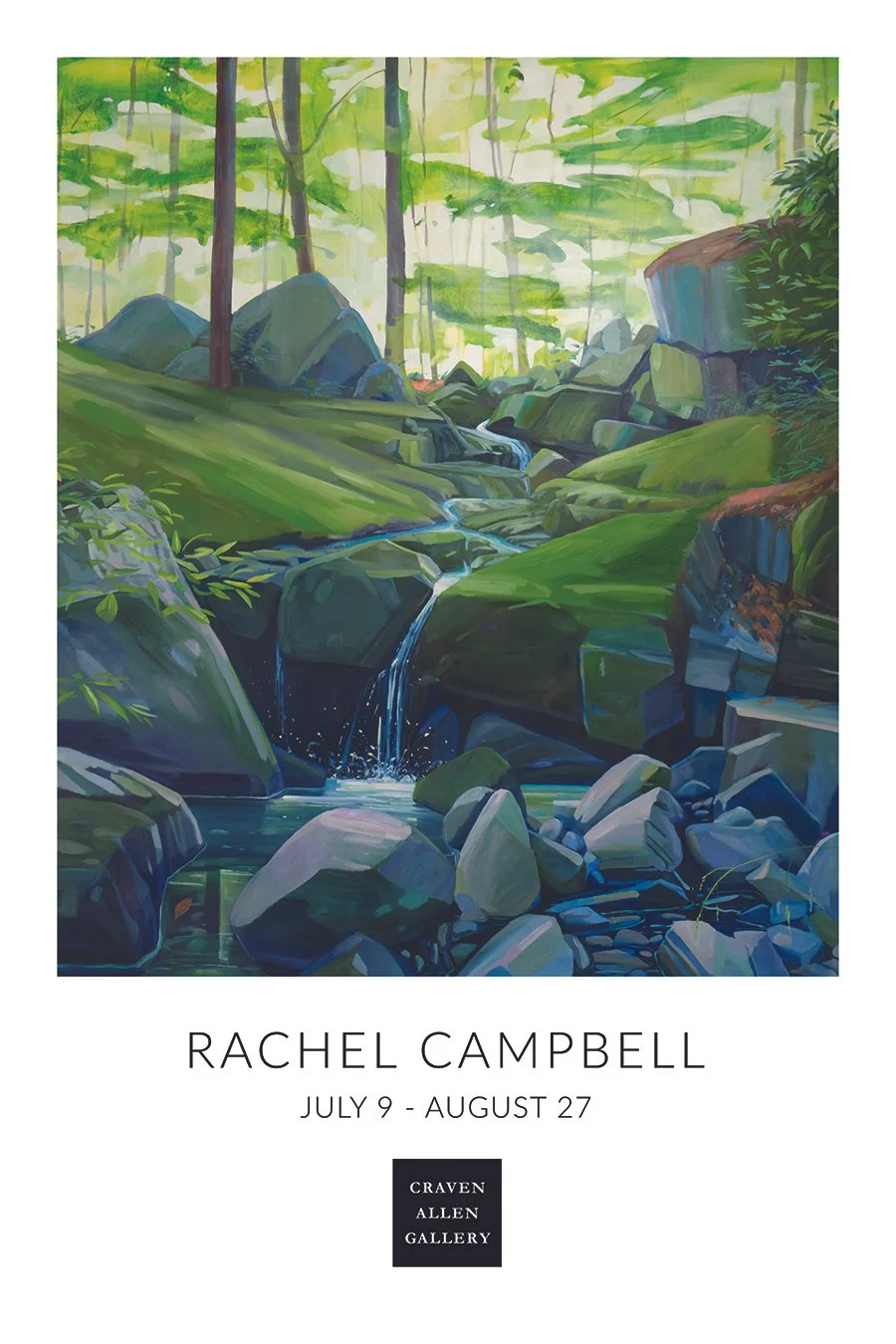
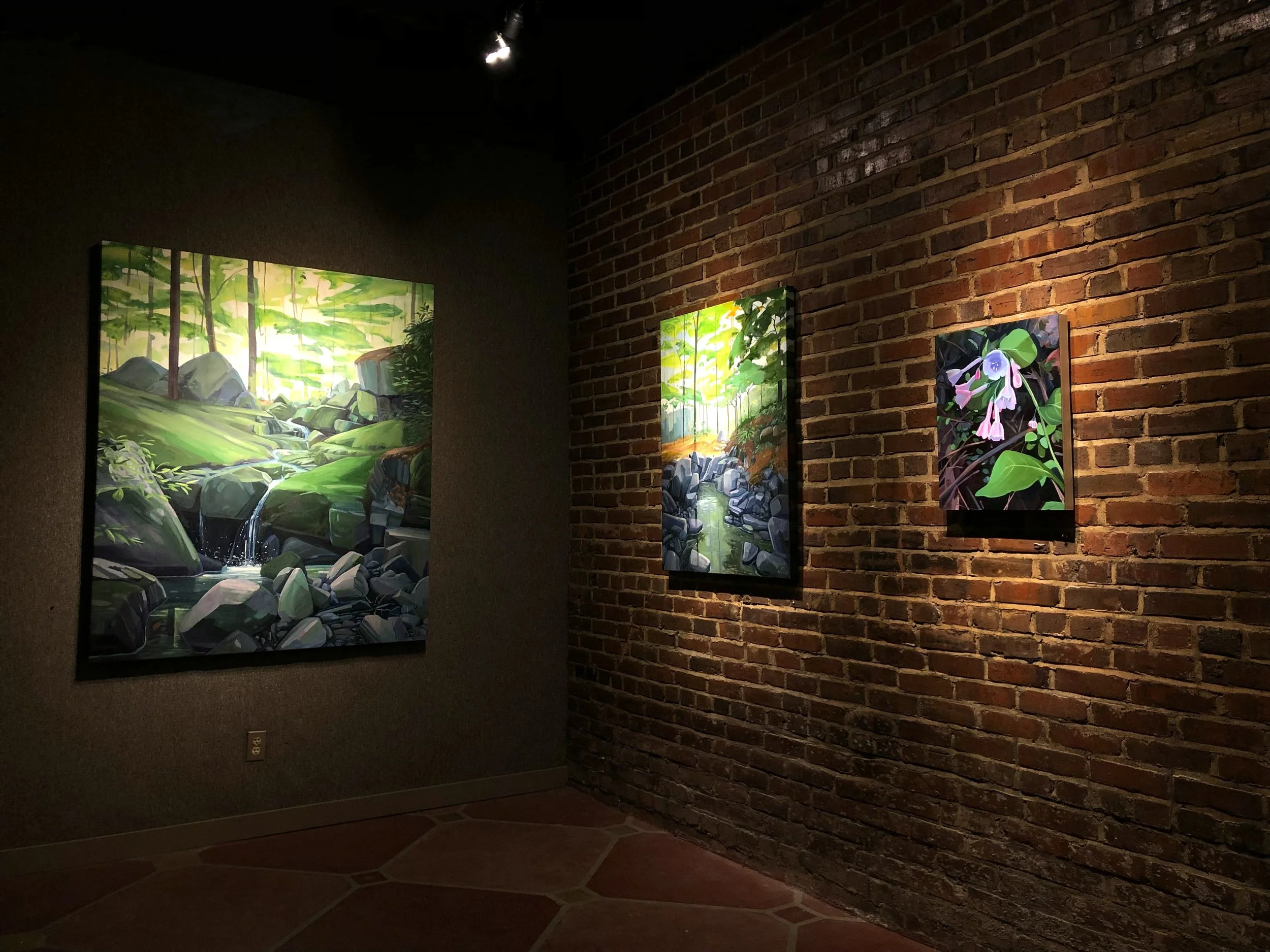
Tell All the Truth but Tell it Slant
July 9 - August 27, 2022
New Zealand native Rachel Campbell paints and shows her work all over the world, but makes her home in Durham. With the pandemic curtailing her travels, her vibrant new body of work features many local scenes--from Eno River landscapes to urban neighborhoods and domestic interiors. The title of the show, from Emily Dickinson, refers to her distinctive style of painting, which has been compared to David Hockney and Wayne Thiebaud. “I choose to work in abstracted realism, painting recognizable places and objects that I manipulate through color and juxtapositions of flattened spaces against modeled forms. I broadly paint some areas and use graphic detail to lead the eye to the most important objects in the story. This style of painting allows me to play with composition, to create moods with color, and to give personality and life to inanimate objects”.
All her paintings are filled with narrative detail, and suffused with luscious color, a dynamic sense of line, and often a sly sense of humor.
STATEMENT
Creativity was my escape during childhood and continues to be my joy and salvation. I seek to reveal beauty in the ordinary, whether it be in a brightly colored curtain in a trailer home window, a tree growing amidst small-town architecture, or the intricate pattern on a second-hand chair. I look for the playful side of things normally seen as ugly or mundane and draw attention to the commonly overlooked. My colorful paintings depict environments and their stories. I choose to work in abstracted realism, painting recognizable places and objects that I manipulate through color and juxtapositions of flattened spaces against modeled forms. I broadly paint some areas and use graphic detail to lead the eye to the most important objects in the story. This style of painting allows me to play with composition, to create moods with color, and to give personality and life to inanimate objects.
A human presence is implied by the absence of people and the inclusion of things they have left behind. Memories and experiences fuel my paintings, fleshed out with cherished details from my life—a dog leash, a plant given to me by a loved one, a favorite book, my kitchen table. While the meaning of these personal elements may not be immediately evident, their universality invites viewers to make their own associations. My hope is that my paintings bring forth other people’s stories and stir their memories, encouraging them to find beauty and playfulness in their own daily lives.
“I want to visit the places Rachel Campbell depicts in oil on canvas. These are real places—London as seen from the South Bank, a trailer park, a simple white house on a suburban street. But something about the way Campbell depicts them renders them absolutely magical, at once true to how they exist in real life, and yet utterly dreamy and luminescent.
I want so much to visit these places and thanks to Campbell I have, as best one possibly can. These places—at least how they are depicted here—do not exist out in the world. They exist in Campbell’s own experience and memory. How fortunate that she has the technical ability and generosity of spirit to have expended the effort of translating them onto painted canvas for us all to see. The hope then is that her vision can color ours, encouraging others to see the wonders she sees out there.”
— Lori Waxman, Chicago Tribune Art Critic
“If art isn’t playful, it’s nothing. Without play we wouldn’t be anywhere. Play is incredibly important; it’s deeply serious as well. It’s hardly a criticism of my work to call it playful; on the contrary, it is flattering!”
— David Hockney
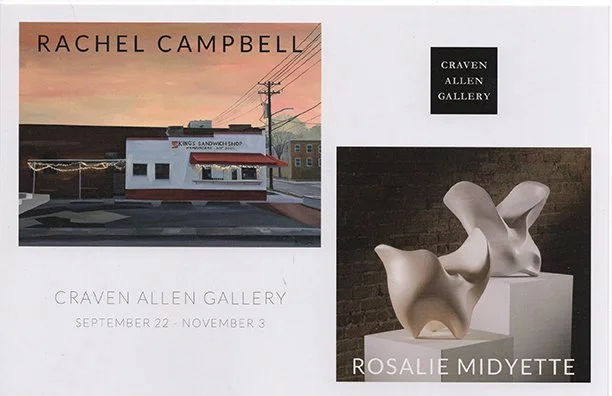
The Flip Side of Ordinary
September 22 - November 3, 2018
Rachel Campbell returns to Craven Allen Gallery after her blockbuster show last year with The Flip Side of Ordinary. Campbell brings a strong color sense and lively brushwork to her subjects—which can range from trailer parks to urban neighborhoods to pastries. “I notice things that are common and ordinary and give them a sense of playfulness and recognition.” The New Zealand native shows all over the world but makes her home in Durham.
STATEMENT
I notice things that are common and ordinary and give them a sense of playfulness and recognition. I tell their stories. I am often drawn to paint trailers and trailer parks, which are repetitive and generic in design, but distinctive and different in their details. They speak of the desire we have to be valued as individuals, but also say that none of us wants to be marginalized or overlooked. Some are trailers colored and cared for—clearly homes filled with life. Some are abandoned, strewn with leftover belongings, suggesting a past mystery that we want to know more about. In this way, all my paintings provide a glimpse of a subtle, individual story that the viewer is invited to complete.
I am a colorist, and so constantly explore the relationships between different colors, along with their emotive effects. Colors have a temperature, so their interaction is a critical element in the stories I tell. I also apply paint in degrees of thickness, moving from gestural washes to thicker, more descriptive paintwork, which pulls the viewer’s focus to the key elements in the story being told.
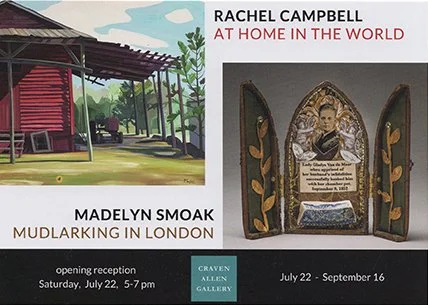
At Home in the World
July 22 - September 16, 2017
Rachel Campbell studied in her native New Zealand and in Canada before making her home in the United States. For At Home in the World, Campbell refuses to get stuck in one style or place. Subjects range from a cottage in Key West, where she recently had a residency, New Zealand landscapes, and take-out meals, to iconic North Carolina subjects like Krispy Kreme donuts, farmers market eggs and trailers. All her paintings are suffused with luscious color, her lively sense of line, and often her sly sense of humor.
STATEMENT
I am like a poet who writes about the everyday with images, journaling and responding to experiences in my life in my paintings. I sometimes explore the urban landscapes of the American South, and at other times those of my homeland, New Zealand. My images also invariably involve narratives. These often then combine to evoke the sense of belonging that we all long for, no matter what our particular environment might be.