
EXHIBITION ARCHIVE
Chance Encounters
March 28 - May 9, 2026
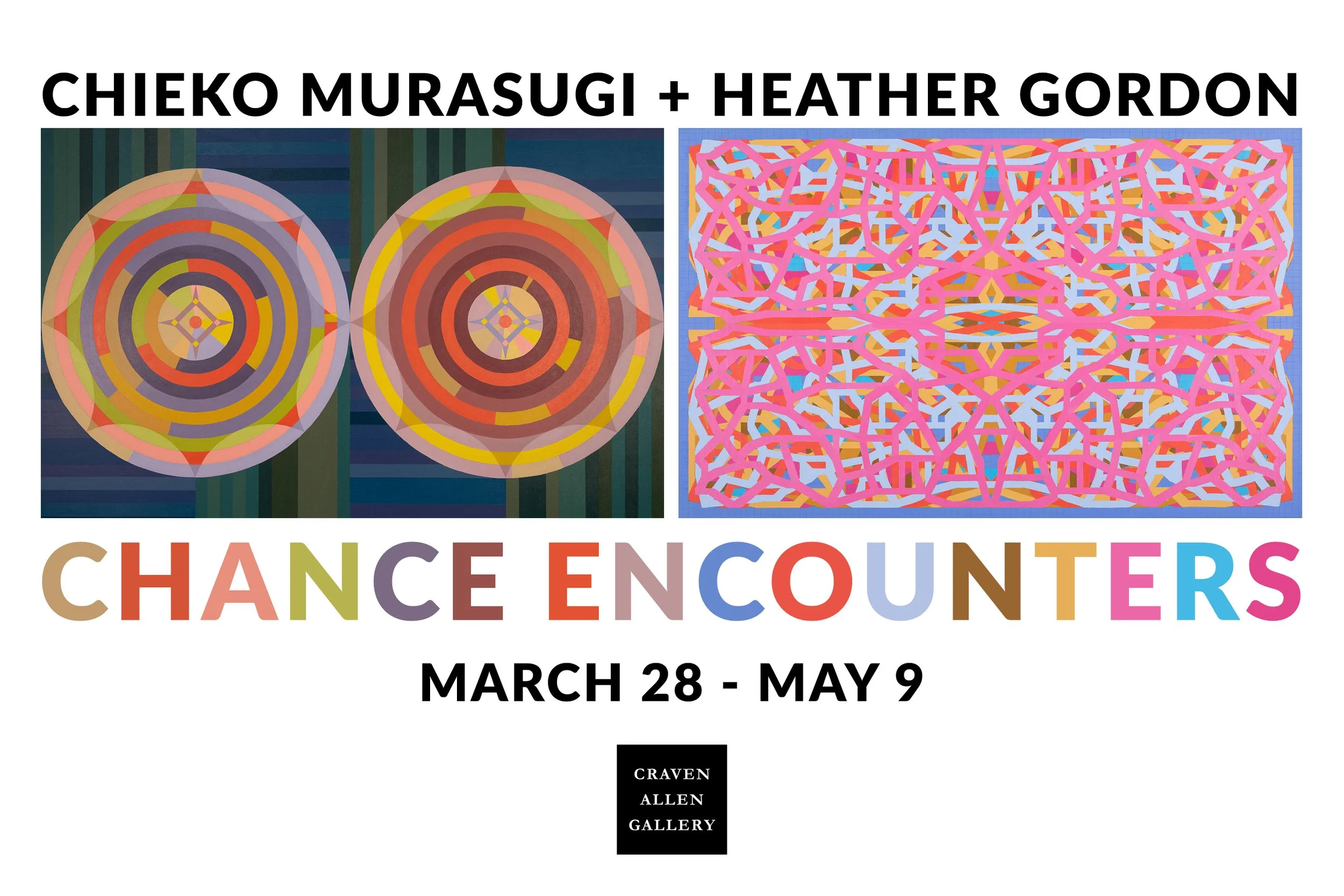
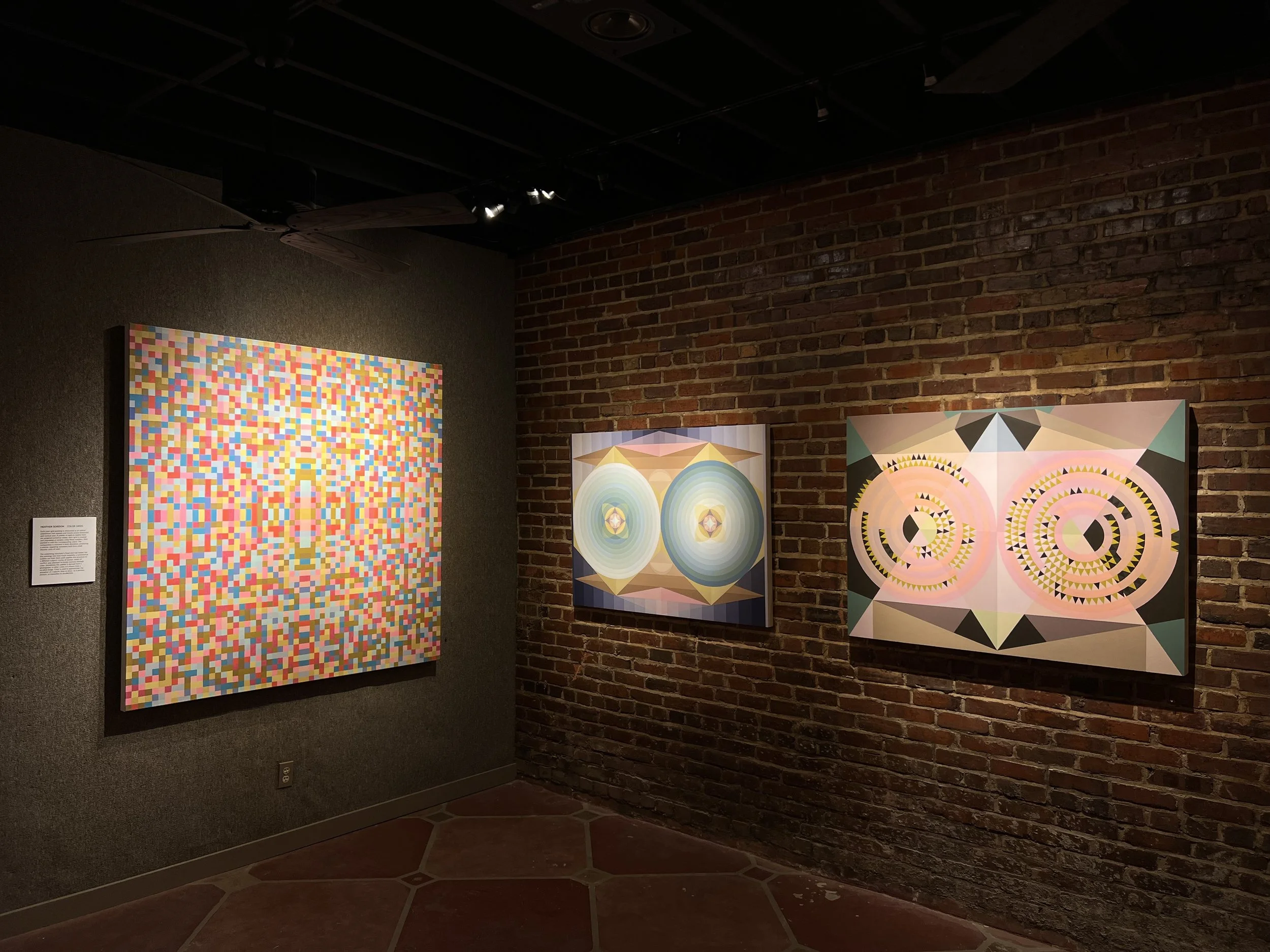
Chance Encounters brings together the work of Chieko Murasugi and Heather Gordon. At first glance, their compositions appear as vibrant, dynamic abstractions, yet each piece is shaped by chance within carefully constructed visual systems. Working with structured frameworks and precise materials—acrylic on panel for Murasugi and oil on canvas for Gordon—both artists balance intuition and method, allowing rhythm, variation, and complexity to emerge over time.
Chieko Murasugi is a multidisciplinary artist whose work is shaped by personal history and perception. Born in Tokyo, raised in Toronto, and now based in Chapel Hill, she traces her fascination with chance to her parents, both survivors of the 1945 Tokyo bombings—her mother’s quick decision to run toward the river saved her life. Murasugi’s newest series, Deuce, uses computer-based randomization to guide composition and color. Each piece features two large circles that share ground but never touch, creating a tension that evokes distance, division, and the challenge of connection. “I was thinking about the United States,” Murasugi explains, “a country broadly divided into left and right, two sides with very different beliefs that struggle to communicate with one another.”
STATEMENT
My practice investigates how chance, history, and contemporary conditions shape meaning and perception. My interest in chance is rooted in my parents’ survival during the 1945 Tokyo firebombings, where chance, not choice, often determined who lived.
I create paintings, mixed media, digital, and textile works that hold order and chance in tension. Randomization operates as both conceptual and formal tool, allowing unexpected visual outcomes to emerge alongside deliberate choice.
In my Deuce paintings, two large circular forms sit within a tightly organized geometric framework. Inside these circles, chance is introduced by using a digital randomization tool to plot two random points along a ring, and an arc is drawn between them. The outside structure remains deliberate; what happens inside is unpredictable. Randomness reveals itself as clusters form, gaps appear, and both subtle and pronounced imbalances emerge.
My work illuminates the uneven and unpredictable nature of chance — a force we can neither direct nor escape.
Sequential
May 20 - July 8, 2023
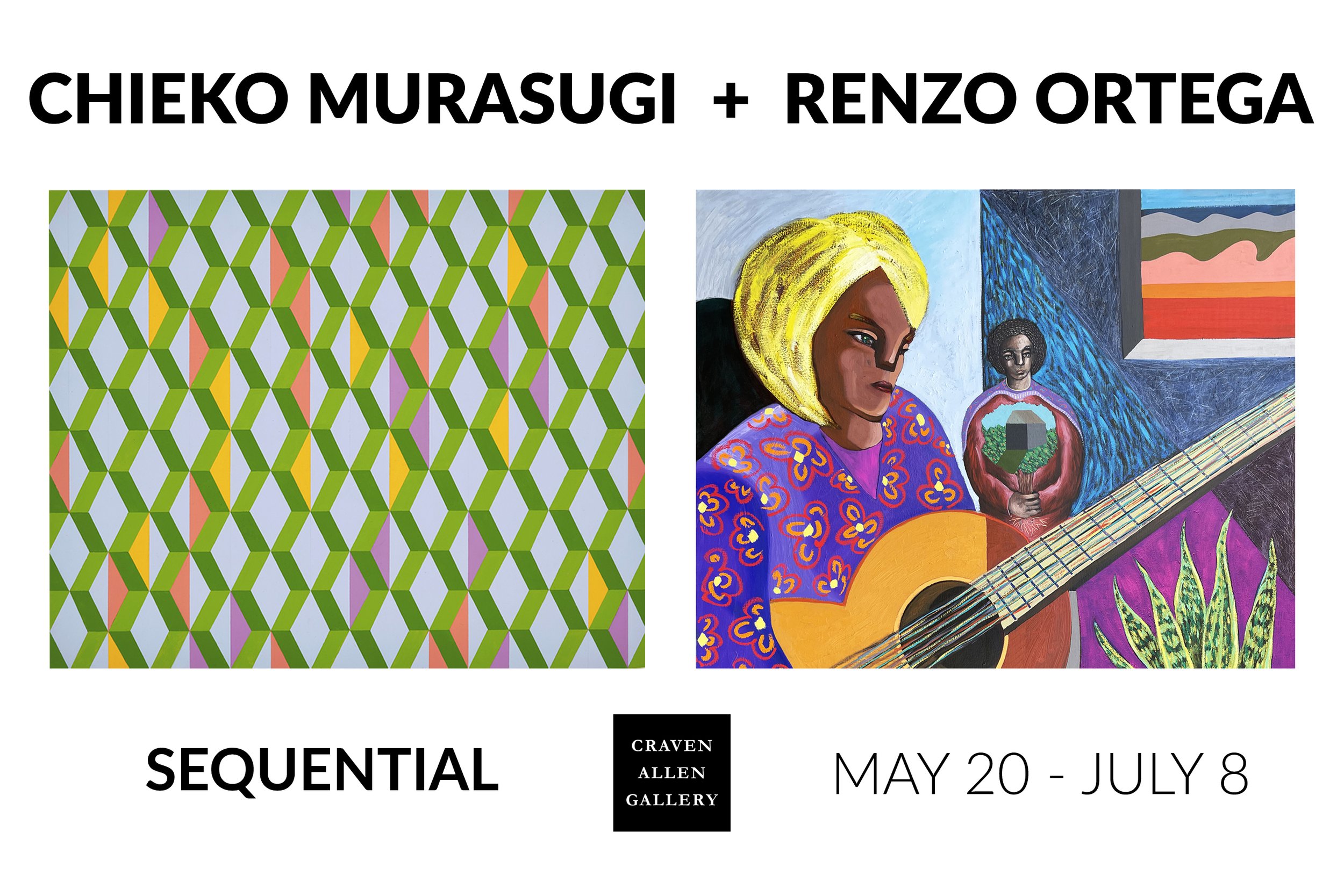
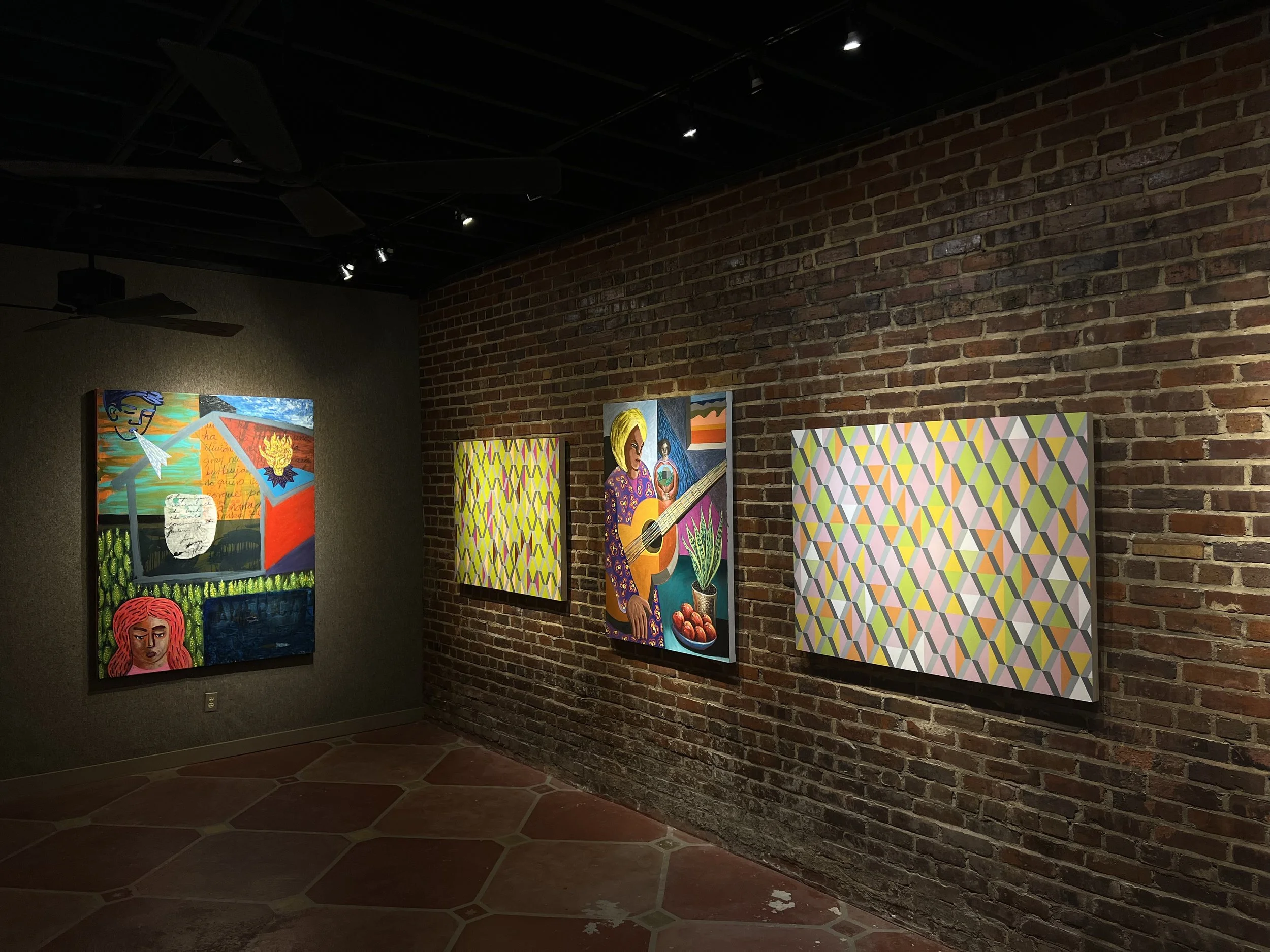
Painting is a sequential endeavor. A painting consists of a sequence of brush strokes, a series is a sequence of paintings, and a body of work is the culmination of the artist’s production. Every painter is also indebted to the long succession of painters who preceded them. In this exhibition, painters Chieko Murasugi and Renzo Ortega, arriving from very different backgrounds and pictorial approaches, create works that speak to the idea of sequence, both within the canvas and outside of it, all the while expressing their vision of what painting means at this moment.
Chieko Murasugi employs personal symbols and visual illusions within an abstract language to access the realm of ideas. She visualizes the notion of chance by using a computer program to "roll the dice" and introduce randomized elements into ordered sequences and patterns. In these paintings, selected features are randomized within both traditional and novel patterns to create a balance between predictable and unstable perceptions. Chieko frequently employs the hexagon, a Japanese symbol of longevity and a shape that holds personal significance. By chance, her parents narrowly escaped the fires from M-69 incendiary bombs dropped on Tokyo during WWII, bombs housed in hexagon shaped containers. In other paintings, Chieko incorporates the recently discovered Einstein hat shape that is based upon the hexagon and creates tile patterns that do not repeat. Lack of repetition is a crucial characteristic of randomness.
STATEMENT
As a trained scientist, my explorations often begin with a question. In most paintings shown here, my question was: can one detect random/chance events within an ordered field? My answer so far, not surprisingly, is yes and no, it varies with the circumstances. It depends, for instance, upon the location, salience, and relative quantity of the random elements. As I continue these investigations, I ponder to what degree chance affects lives, and whether random events receive due credit. These, of course, were my original questions.