
NOTABLE MEDIA & PUBLICATIONS
Raising Renee, HBO Documentary Films, directed by Jeanne Jordan and Steven Ascher, 2012. Emmy Award nominee for Outstanding Arts and Culture Programming.
Penelope Green, At Home With the Artist Beverly McIver, The New York Times, 2012.
Chadd Scott, "What Comes Up, Comes Out" in Beverly McIver Paintings,Forbes, 2023.
Paul Wachter, Painter Beverly McIver's Art Is Not Safe, Andscape, February 10, 2022.
Vivienne Serret, NC Painter Beverly McIver Wants to Make Art That Makes a Difference, The News & Observer, 2024.
Jim Moriarty, The Light Within, O. Henry Magazine, 2020.
Chris Vitiello, Being Beverly McIver, INDY Week, 2013.
Priscilla Frank, Painter Beverly McIver Talks Clowns, Cindy Sherman and Breast Reduction Surgery, HuffPost, July 31, 2013.
Phyllis Hollis, Episode 217 – A Conversation with Beverly McIver, Cerebral Women, October 16, 2024.
EXHIBITION ARCHIVE
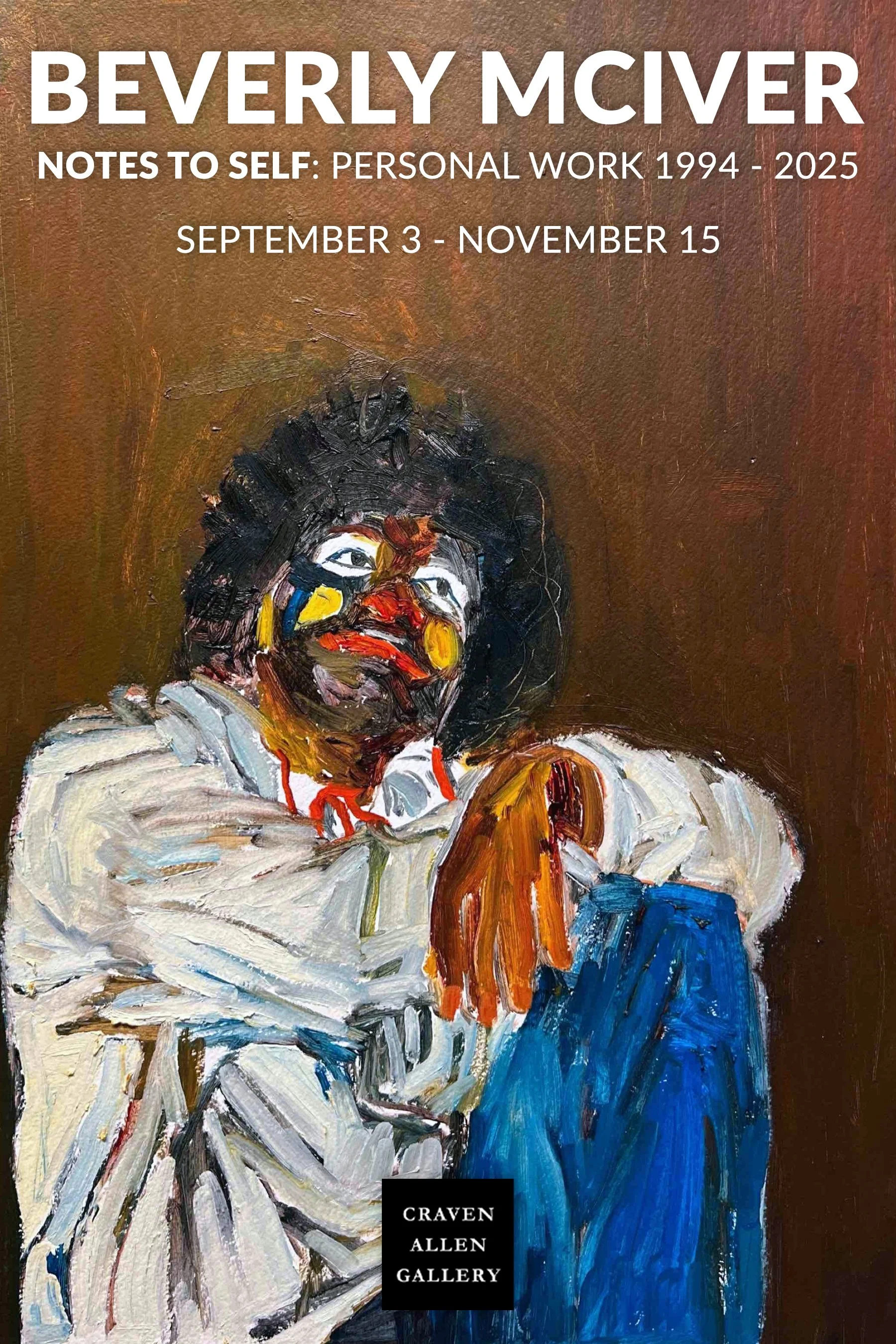
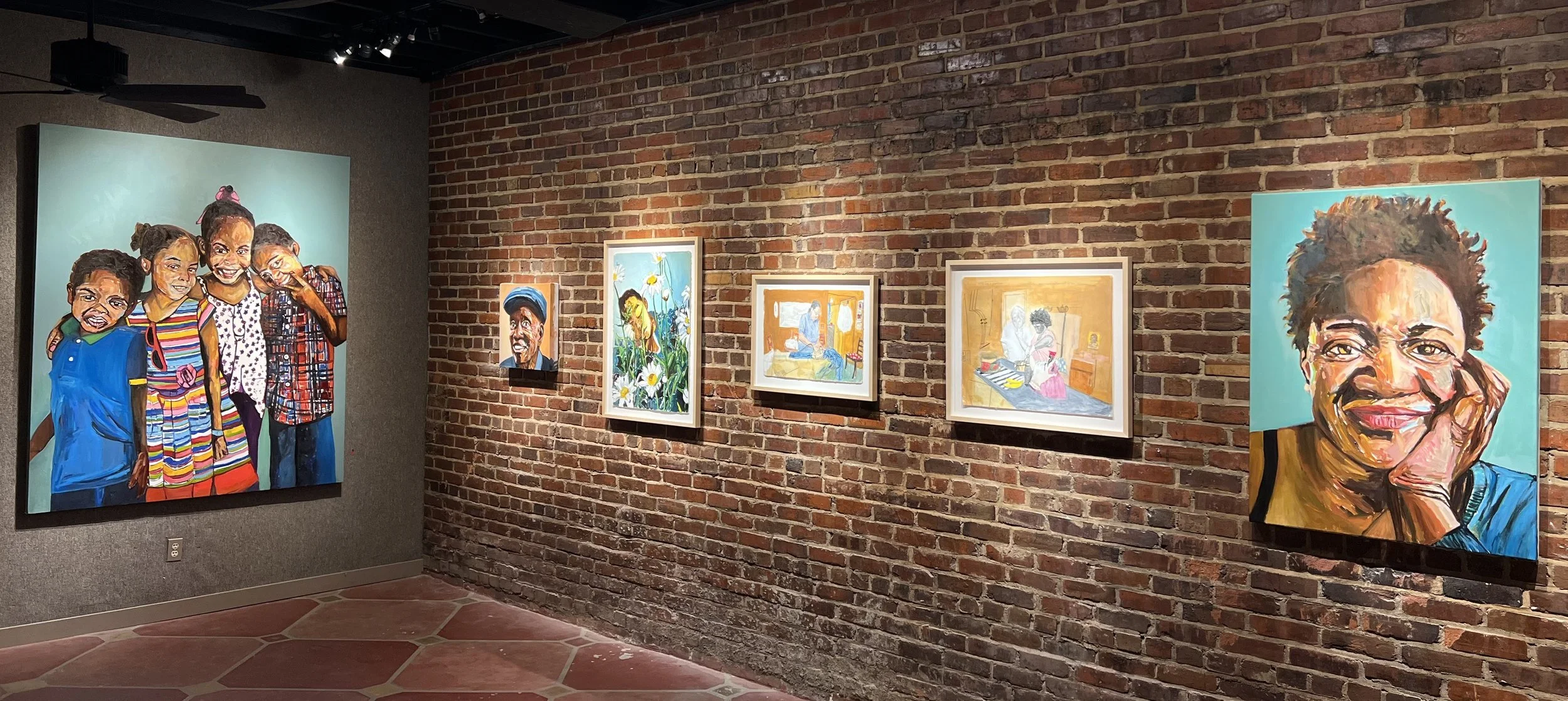
Notes to Self: Personal Work 1994 - 2025
September 3 - November 15, 2025
After a lifetime of teaching, McIver made the difficult decision to retire from her position at Duke University to focus on artmaking with a renewed intensity.
Her exhibition Notes to Self is a deeply personal selection of new work, including still lifes which verge on the abstract, and portraits of herself and her family. Alongside these paintings are seminal pieces, never before seen, which McIver created as part of her personal practice. In these intimate works she explores themes and techniques that would later appear in some of her most celebrated canvases. Drawing, printmaking and collage allowed her to create freely, exploring concepts outside the bounds of oil paint. Watermelons, clown makeup and other signature motifs are rendered in atypical ways with diverse materials.
Beverly McIver lives and works in Chapel Hill, North Carolina. Known for her expressive self-portraits and intimate family narratives, her work is held in major collections including the Smithsonian’s National Portrait Gallery, the North Carolina Museum of Art, and the Baltimore Museum of Art. She has received numerous honors, including a Guggenheim Fellowship, the Rome Prize, and, most recently, election as a National Academician by the National Academy of Design. McIver was the subject of the Emmy®-nominated HBO documentary Raising Renee and in 2022 was celebrated with Full Circle, a traveling retrospective organized by the Scottsdale Museum of Contemporary Art. She is currently developing an artist residency program, Renny’s Place, in honor of her sister.
STATEMENT
Notes to Self is a deeply personal compilation of memories, reflections, and lived experiences. Over the course of my artistic journey, I have explored themes of time, family, and self-identity through a variety of mediums—including monoprints, lithographs, collages, and drawings on paper.
Throughout my 32 years of teaching, most recently at Duke University, I have had the privilege of guiding many students who are now practicing artists. This legacy inspires me to continue creating and sharing my own story—a testament to both the joys and challenges of life.
Symbols such as clocks, watches, and calendars, metaphors for the passage of time, recur frequently in these pieces. Portraits, including depictions of myself as a blackface clown, and other images such as black in a box, watermelon slices, and especially paintings of my sister Renee, and my father and mother, reflect my work’s intimate connection to family and identity.
One of the most meaningful pieces to me is a mixed media work of my mother ironing, capturing a rare and precious memory of her before her passing in 2007.
Recently, I have begun creating new self-portraits based on feedback from friends who perceive me as beautiful and sexy—responses that initially surprised me, as I have never thought of myself in those terms. These images are an exploration into perceptions of beauty. My interest lies in developing artwork that speaks to these qualities, challenging my own notions and inviting viewers to consider what these concepts mean.
This exhibition is as much a reflection of my internal world as it is an ode to those who have shaped me. It is an invitation to reminisce, to recognize the importance of family, and to embrace my current self with honesty and grace. Creating has always been a channel for private thoughts, and through this work, I hope to leave a legacy that contributes to a better world.
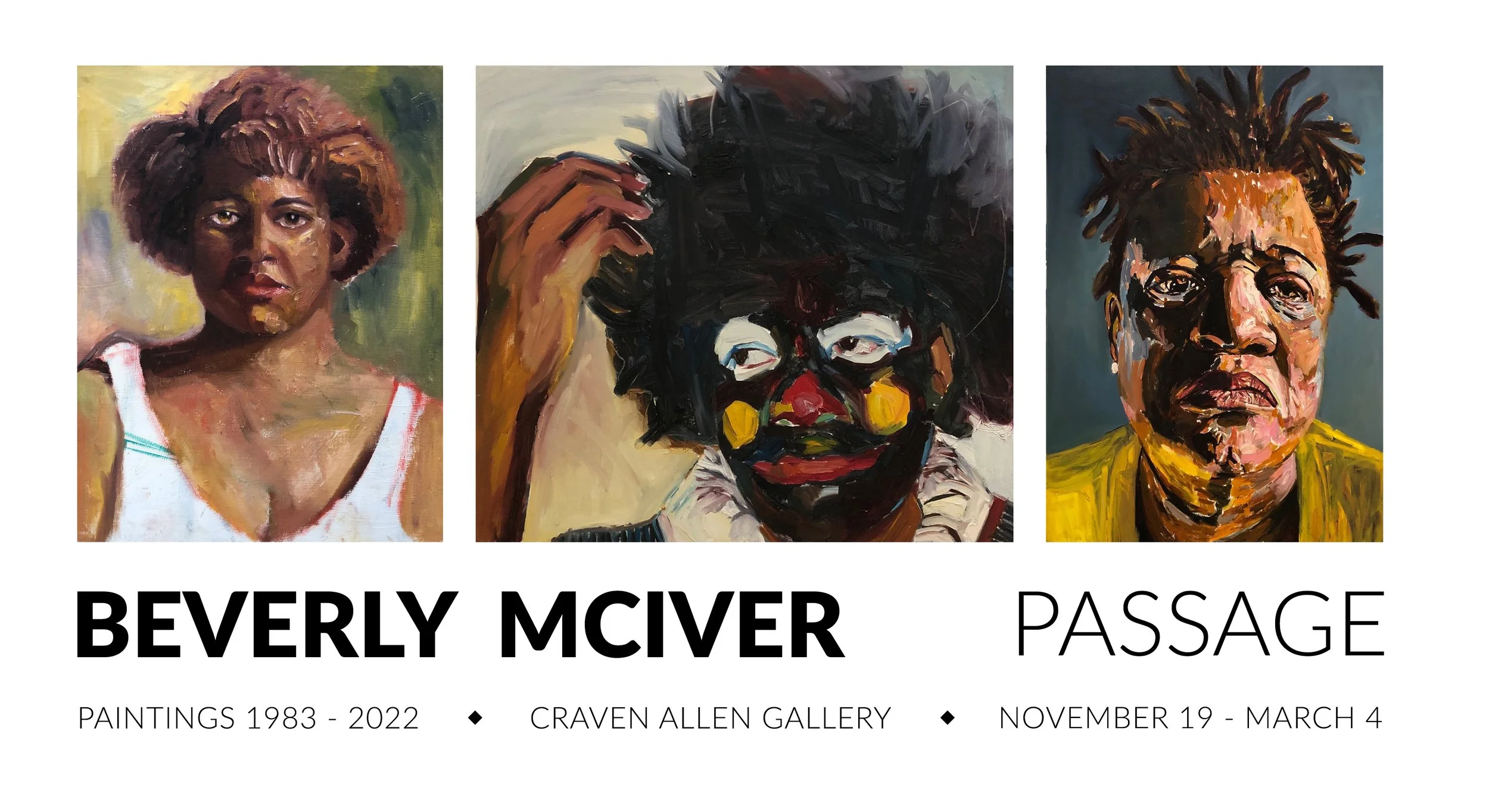
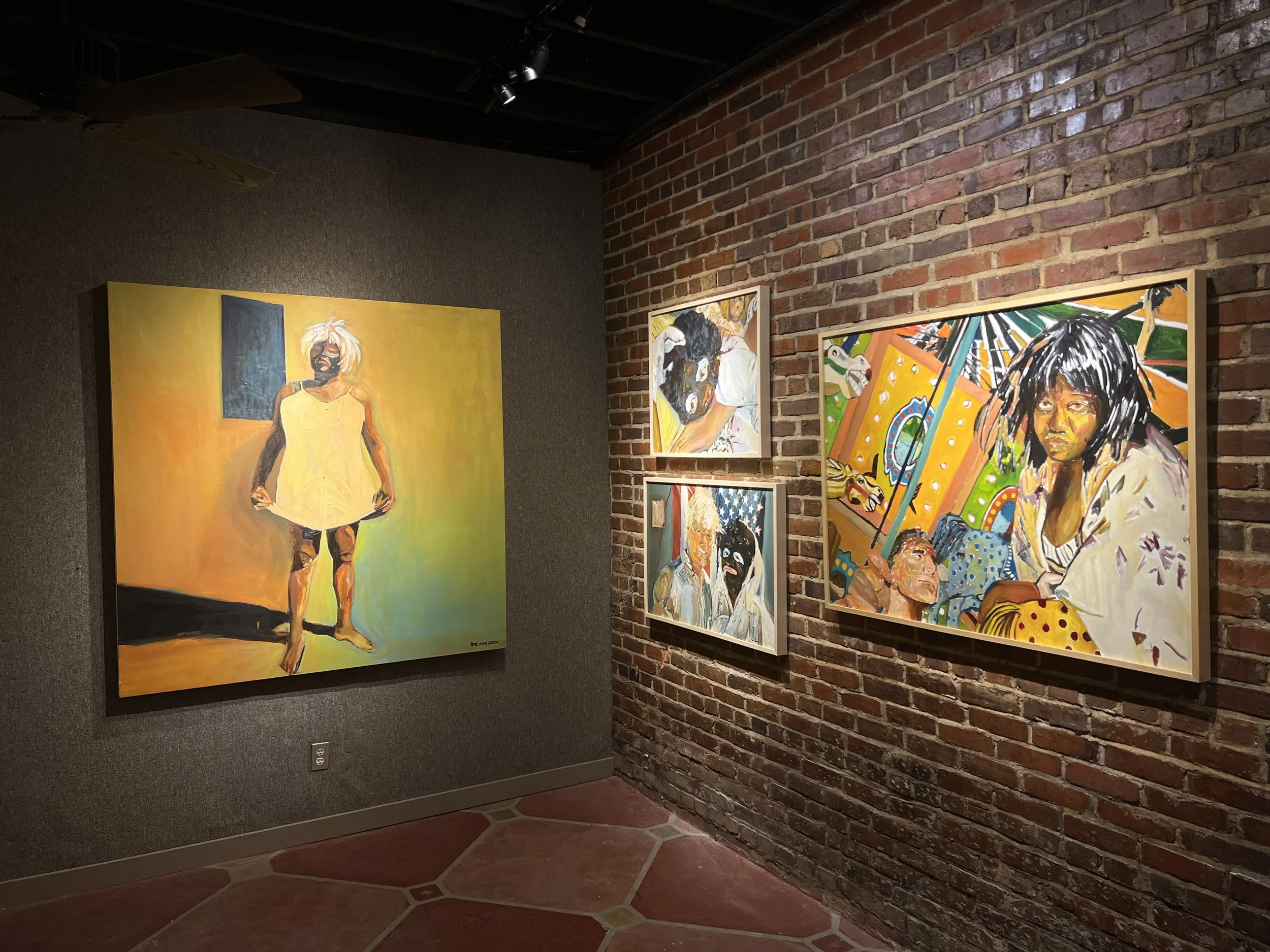
Passage: Paintings 1983 - 2022
November 19, 2022 - March 4, 2023
STATEMENT
I try to face whatever is going on in my life, joyful or painful, through my paintings. I express myself with brushstrokes. It’s how I process my happiness or grief, and how I communicate with the world.
Passage tells stories from my life and celebrates the people who have nurtured and loved me over the past 50 years. These paintings tell my story over time. I try to live with intent, examining everything both good and bad—the human condition—and to share my experience honestly.
Some of the newest paintings in Passage explore my grief surrounding the death of my father earlier this year. I try to pour my soul into the canvas, not the page, so writing about these paintings is hard, like ripping a bandage off a wound that is fresh and deep.
My dad is dead and there’s no going back. I don’t have regrets. I simply wish I had more time to love him and feel the love he showed me in the last years of his life. Caregiving in the last six months of his life was overwhelming; washing, changing diapers, cooking and cleaning. He died shortly before my career retrospective, Full Circle, opened. I heard God whisper that it was time for him to go. I had learned the lesson that brought us together as a family. I fell in love with him, and he gave me permission to love him. He was 95 and lived a good life, he was ready to go. Still, I grieve. And I paint.
I’ve had a lot of help from family, friends, and mentors. Collectors have stepped in at crucial times to allow my journey to continue. I can’t thank everyone here, but I am so grateful for those who helped me through these pivotal moments. In turn I’ve tried to reach back to help or bring others to the table.
Passage shows a long journey, and I feel blessed. These paintings remind me of where I’ve been—and, more importantly, what I still want to say.
Life is not easy, nor fair. It’s a journey that requires flexibility and courage. It requires nurturing. You must learn to feel worthy and be confident in your authentic self and know that it is enough. Art is a celebration of our struggles and differences. Art gives me hope.
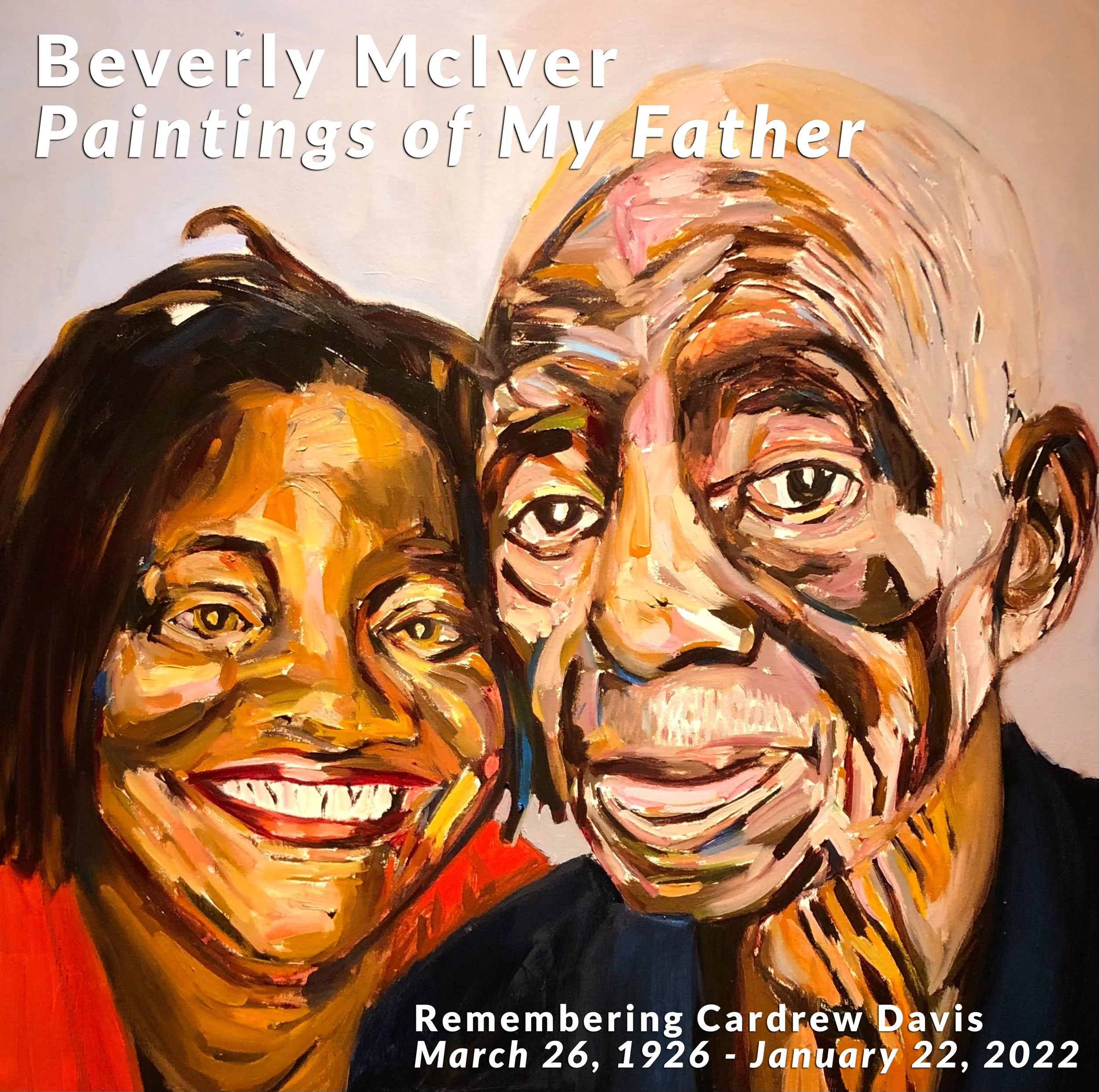
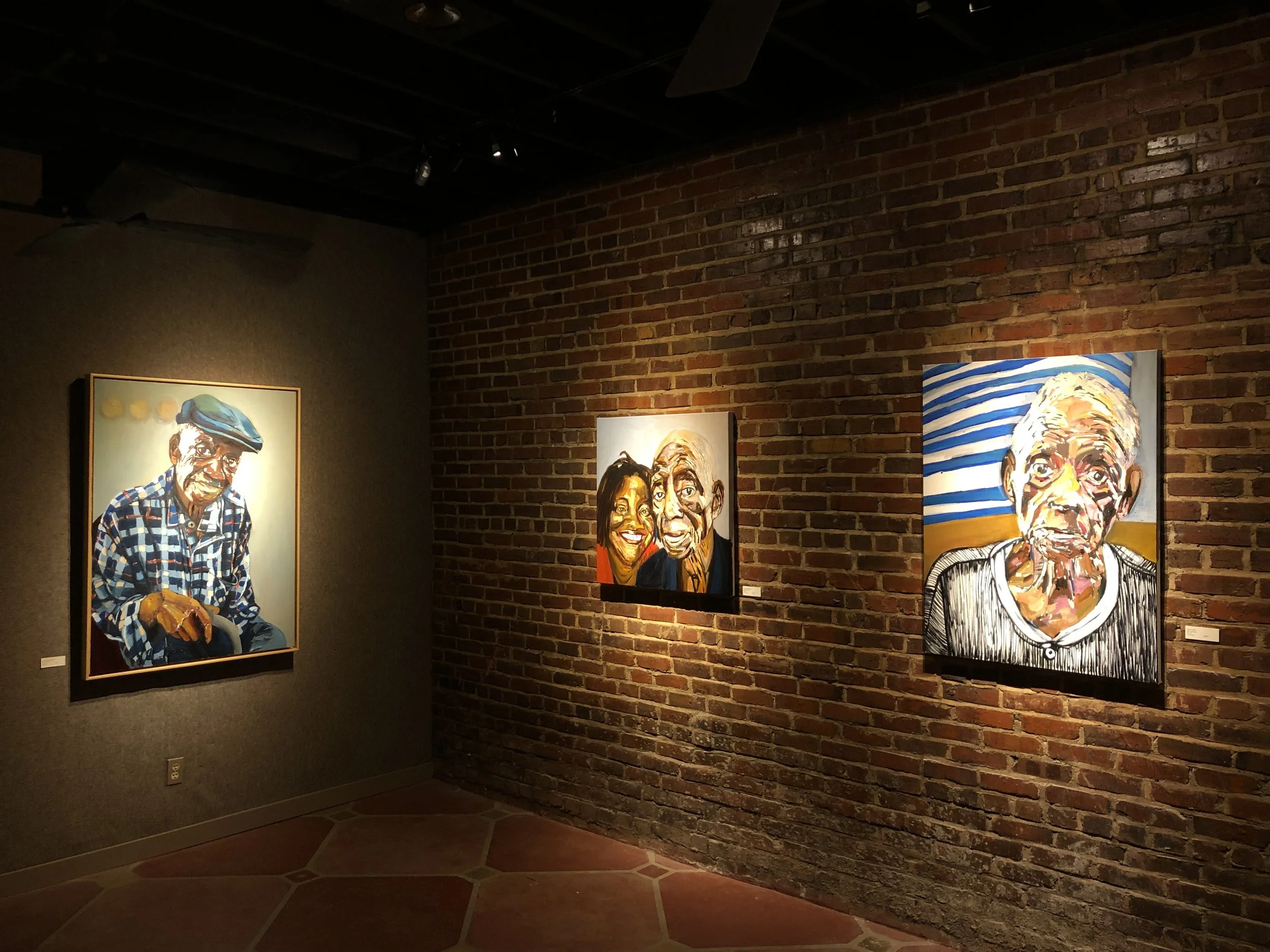
Paintings of my Father: Remembering Cardrew Davis
February 4 - March 1, 2022
STATEMENT
I’m feeling pretty numb about my dad. I can’t believe he’s no longer here. I can’t wait for hospice to collect their oxygen tanks and other apparatus. I need to paint the room and change the furniture so that I’m not constantly thinking this is where I found my father’s lifeless body lying with his eyes open. He lay there most of the day on Sunday because of the snowstorm and no funeral home had four-wheel drive. Hospice was great with calling local funeral homes; finally, Clements braved the weather to collect my dad’s body. I am grateful to them.
What brings me great peace is I know for sure that my dad knew he was loved.
He was 95 years old and independent–until the fall six months ago. He first went to a rehab center, but three months ago, I was able to move him to my home. It was a challenge to care for him, as he was unable to walk and needed to be fed. I learned more about him in that three-month period than in all the time before put together. His dentures (top and bottom) no longer fit because he had lost so much weight. He was tall, 6’1”, and most of his life weighed well over 250 pounds; at the end he weighed 114. My challenge was to purée foods that were tasty and familiar. Soup, mashed potatoes, sweet potatoes, grilled cheese, and ice cream sandwiches became staples.
My dad was the last of his five siblings and his friends. He felt alone and had difficulty letting anyone in. He thought that giving and receiving money was a marker for love (he would give me $20.00 as a teenager, when I visited him).
During our time together, I was able to show him love by caring for him. Trusting and allowing yourself to love another became a new sign of love. I think he hadn’t experienced that in his life. No one ever got close enough to love him.
We spent our final days loving each other. We both learned that it was okay to be vulnerable and lean on others for support. I know he felt loved. I was reassured that he loved me too.
BEVERLY MCIVER AND CARDREW DAVIS
Beverly McIver was first introduced to Cardrew Davis, the man she now knows to be her father, at the age of seventeen. Despite warnings from her mother that “he will disappoint you, just as he disappointed me”, McIver clung to some hope that her mother was wrong about him. This hope fueled her desire to pursue a relationship with her father after her mother’s death in 2004.
She came to know her father intimately over the years, sharing meals, visits, and especially capturing moments of his life—resting, eating, or simply gazing back at her—in paint. McIver’s portraits of Cardrew Davis have become among her most iconic works; her 2018 portrait Taxi Driver, is held in the permanent collection of the Cameron Museum of Art in Wilmington, North Carolina.
In November of 2021, Beverly moved her father into her home. She made the difficult decision to take him out of the rehab center he was admitted to after suffering a serious fall a few months prior. Caring for him was demanding, as he could not walk and needed to be fed. Despite the challenges, McIver says she is glad they were able to spend their final days loving each other.
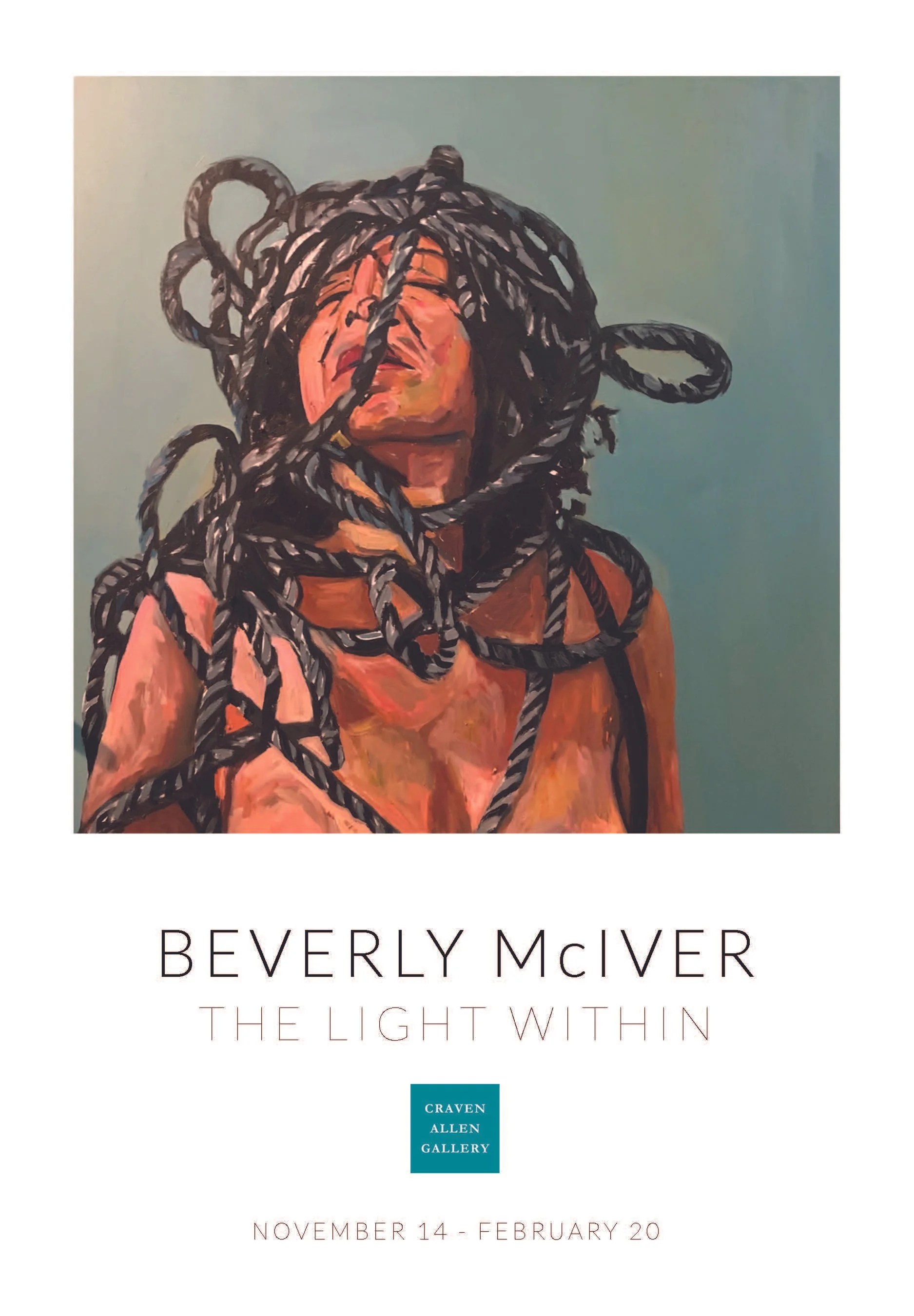
The Light Within
November 14, 2020 - February 20, 2021
A nationally known artist who has been named Top Ten in Painting by Art News, Beverly McIver was working nonstop, teaching classes at Duke, leading workshops all over the country, caregiving for her family, and painting when she could. When Covid hit, along with all of 2020’s racial and political turbulence, McIver’s life changed dramatically. McIver faced the chaos and isolation the only way she knew how—through paint.
It was an intensely productive time. “I painted daily. It was both thrilling and terrifying; all this energy poured into two dozen new paintings,” says McIver. Through a series of self-portraits and paintings of family and friends, McIver confronted her feelings and fears. She created portraits of her sister and her 94-year-old father as a means of remaining intimate even as they all struggled with loneliness and isolation. A colorful silk scarf draped over her head became a mask or a blindfold. Light filtering through blinds in her home beautifully contours her face, yet also suggest prison bars. A heavy black rope figures prominently in many of the new works. “Black friends interpreted the rope wrapped around my head as a noose and white people saw the rope as my dreadlocked hair blowing in the wind. The interpretations of the two worlds I straddle daily, collided.”
“My voice felt loud and unapologetic. I felt power in speaking my truth. I hadn’t been loud enough, and I needed to scream it,“ says McIver. “These new works do just that. I have never felt the need to be so bold about constraints and restrictions. This is the time to be brave.”
A career survey of the artist’s work begins at the Scottsdale Museum of Contemporary Art in 2022, before touring the country. McIver is curating a show of contemporary African American artists working in North Carolina for Craven Allen Gallery in 2022.
STATEMENT
When Covid-19 entered my life in mid-March of 2020, I felt somehow responsible for the deadly plague. I had been praying all year for life to slow down and allow me the time to catch my breath. I felt like I was on a Ferris wheel going around and around with no way to exit; if I wanted to stop, I would have to jump off. I thought that if I got into a car wreck, I would at least have the luxury of resting in a hospital bed in peace, with few visitors.
Then Covid arrived and the world locked down. No classes to teach, no flying around the world giving lectures or teaching workshops; everything came to a screeching halt. It was time to reinvent myself–to redefine my purpose in life. I was scared and hopeful and open to a newness. I had no expectations except to be flexible and open; I have learned that is the only way to survive change. I knew I would grow, that growing pains are real, and that the more you grow, the more pain you must endure. I allowed myself to be sad, even depressed for several days.
But the lockdown gave me the opportunity to just paint, to discover and experiment. I gladly accepted the challenge and began painting daily. I wanted to respond to the chaos in the world in a meaningful way.
Family ties remained strong. As a caregiver to my sister and 94-year old-father, I had to be especially careful. The lockdown made our get-togethers more difficult and strained. My sister Renee tells me often that she is lonely. My father especially doesn’t really understand Covid: he tells me he doesn’t have any germs and hates all the precautions. I continue to paint my family as a way of expressing my love and care.
Two new series came to dominate my work, and further my exploration of masks and identity. I draped a beautiful silk scarf, given to me by an artist friend, on my face. Sometimes I couldn’t see, sometimes I couldn’t breathe. Blindly, I snapped a few selfies, standing in front of the window, with sunlight pouring in through the blinds. It created its own pattern on top of the brilliant colors. The paintings with the scarf surprised me with their strange beauty. They were disconcerting, yes, but also, somehow, comforting. The scarf became my new mask, my way of remaining in the shadows.
My painting mind was overflowing with ideas; I got a length of black twisted rope, unsure what to do with it. Again, I stood in front of my sunny window and wound the weighty rope across my face and neck. My vision was obstructed, a helpless feeling. I snapped a few shots. I moved slowly, noticing how the sunlight hit the rope and my brown skin that prickled through. After a few minutes, I removed the rope, as it was scratchy and heavy; the burden of history. I cannot describe what I was feeling in words—I just had to paint it. Intuitively it felt on point; I felt I was clearly acknowledging something significant deep inside me. It was exhilarating.
Black friends interpreted the rope wrapped around my head as a noose and white people saw the rope as my dreadlocked hair blowing in the wind. The interpretations of the two worlds I straddle daily, collided.
I kept the dialogue going by enticing family members and friends to wrap themselves with the rope. I painted daily– it was both thrilling and terrifying; all this energy poured into two dozen new paintings. My voice felt loud and unapologetic. I felt power in speaking my truth. I hadn’t been loud enough, and I needed to scream it. These new works do just that. I have never felt the need to be so bold about constraints and restrictions. This is the time to be brave.
I am never going back. I am not interested in returning to the way things were. It is the time to create something new, something inclusive of all mankind. Black Lives Matter. We must as humans care about each other.
This quote by Sonya Renee Taylor says it best:
We will not go back to normal. Normal never was. Our pre-corona existence was never normal, other than normalized greed, inequity, exhaustion, depletion, extraction, disconnection, confusion, rage, hoarding, hate and lack.
We should not long to return, my friends. We are being given the opportunity to stitch a new garment. One that fits all of humanity and nature.

Painting Larry
Larry Wheeler with Beverly McIver and Damian Stamer
October 9, 2019
Two of the Triangle’s most exciting artists took on the challenge of painting Larry Wheeler, director of the North Carolina Museum of Art, on the occasion of his retirement. Now you can join Larry Wheeler, Damian Stamer and Beverly McIver as they use these paintings as a springboard for a discussion about art from the vantage point of both artist and collector.
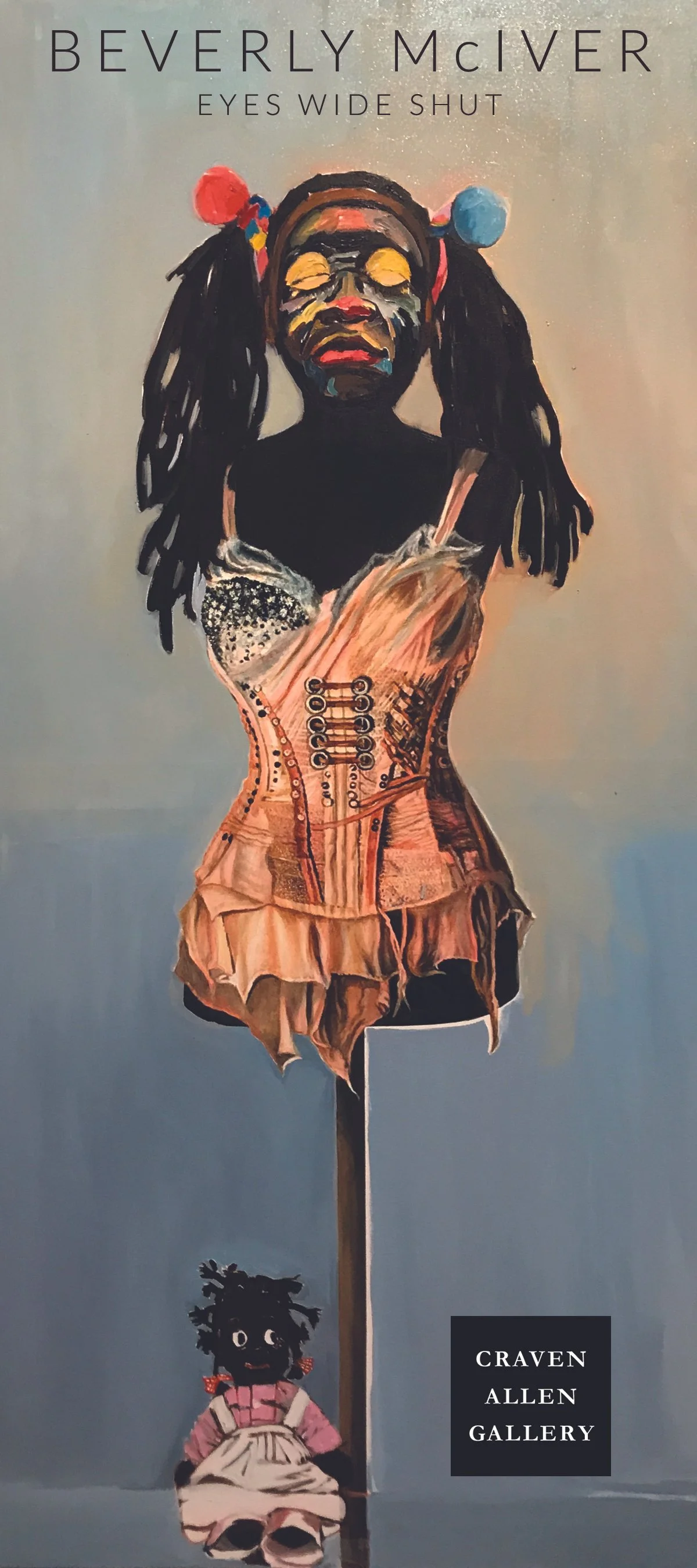
Eyes Wide Shut: Paintings from the American Academy in Rome
November 17, 2018 - January 26, 2019
As a winner of the Rome Prize, nationally known painter Beverly McIver was able to leave her hectic schedule of teaching at Duke University and the burden of caregiving for her family to spend a year painting, a true luxury for the artist. “Italy–outwardly spectacular, with its mysterious quality of light–gave me the gift of being able to hear my inner voice loud and clear.”
The artist noticed a peculiarity in the works she created during this intensely creative time. “In most of the portraits I created, my subject’s eyes are either closed or covered by sunglasses. But I realized the closed eyes were not a refusal to see, but a turning inward, an experience of centeredness. I felt like my time at the academy was introspective and sometimes, as a person of color, in the historic heart of Western Civilization, I felt invisible. But this was also freeing. I couldn’t remember the last time it was this quiet in my head.”
Since returning from Rome, McIver has been “… fascinated with those who courageously share their authentic selves with the world. I continue to create portraits of white males in blackface, black women in body paint, and men who dress in drag. I remain intrigued by mask, dress-up, and how we as humans choose to define ourselves… I hope these new paintings inspire others who may need permission to be their authentic self. “
McIver recently received the Anyone Can Fly Foundation Lifetime Achievement Award in a ceremony hosted by Faith Ringgold. While in Rome, she appeared in a short documentary on Italian television, Beverly McIver e il colore nero. Her work is in major museums and collections across the country. She is the Ebenshade Professor of the Practice of Visual Arts at Duke Univesity.
STATEMENT
It is natural to be afraid of where your journey will take you, and who you might encounter along the way. The challenge is to remain open, both spiritually and mentally, as you follow your path–to be fully present.
A yearlong fellowship at the American Academy in Rome gave me the chance to rediscover myself as an artist. For the first time since inheriting the responsibility of caring for my mentally disabled sister Renee, I was free of the burden. Who was I when I wasn’t a caregiver to Renee and my 92-year-old dad, or a teacher of students, or an artist living under the weight of the history of the American South? Who was I when I was only responsible for myself?
I felt many emotions simultaneously and was keenly aware of the intensity of being alive. I was learning, as if for the first time, what I liked and disliked. Mostly, I was able to paint. I painted daily at the academy, a creative outpouring of work inconceivable in my life at home.
I was able to silence all the voices in my head that tell me what to do or what might sell. I allowed my intuition to guide my choices of who and what to paint. In most of the portraits I created, my subject’s eyes are either closed or covered by sunglasses. But I realized the closed eyes were not a refusal to see, but a turning inward, an experience of centeredness. I felt like my time at the academy was introspective and sometimes, as a person of color, in the historic heart of Western Civilization, I felt invisible. But this was also freeing. I couldn’t remember the last time it was this quiet in my head.
My quest for identifying my true self was heightened by an important portrait commission. I had spent most of my formative years wanting to be white clown, with blonde hair; I often paint myself in white or blackface and in costume. One white client courageously asked for a portrait in blackface and red stiletto heels, an expression of his inner life. Working on the painting affected me profoundly. Although our reasons differed, I realized we are both humans in search of our truth.
Since I returned from Rome, I’ve been fascinated with those who courageously share their authentic selves with the world. I continue to create portraits of white males in blackface, black women in body paint, and men who dress in drag. I remain intrigued by masks, dress-up, and how we as humans choose to define ourselves.
Italy–outwardly spectacular, with its mysterious quality of light–gave me the gift of being able to hear my inner voice loud and clear. I discovered a sense of peace with who I am at this moment. I hope these new paintings inspire others who may need permission to be their authentic self.
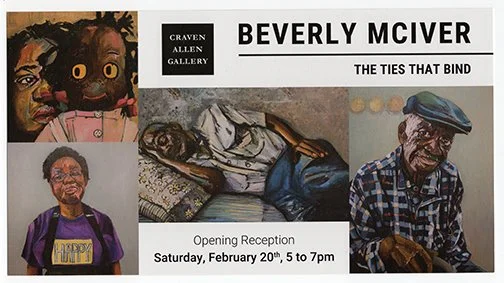
The Ties that Bind
February 20 - April 9, 2016
McIver’s latest work continues her exploration of family. Her subjects include her sister, friends, the artist herself, and most particularly McIver’s new relationship with her father. The Ties That Bind documents “ . . . the beginning of a love story,” in which she seeks to capture and discover her father, Cardrew Davis, through paint. The artist was shocked to learn the identity of her biological father at the age of 17, and it was only after her mother’s death in 2004 that she began to have a relationship with him. Mr. Davis is shown in many different contexts, but perhaps none more vulnerable than while sleeping, in a work called “Arrangement in Blue and Black No. 1” Many images reference the passage of time: clocks, calendars, letters, and childhood toys with McIver’s vibrant palette and luscious textures featured prominently.
STATEMENT
Learning to Love Cardrew Davis
One day when I was seventeen, my mother informed me that I had a different father than the man listed on my birth certificate. Her words were shocking to me, and I turned toward the screen door to find a large framed man standing at the doorway. My mother introduced him as my father. I could hardly breathe; I stood in silence and confusion. Cardrew smiled at me and extended his hand. I couldn’t move.
My dad handed me a twenty dollar bill. I would learn over the next several years that the gift of a twenty dollar bill would be his way of showing love.
My mother continued her anger toward my dad, never forgiving him for not rescuing her from a bad marriage. She often told me, “he will disappoint you, just as he disappointed me.” I didn’t want to believe her, but she was right–unlike my dad, my mom was present, and raised me and my two sisters.
It was not until my mother’s death in 2004 that I decided to have a relationship with my father. I realized that it had not been realistic for my mom to expect my dad to rescue her. Cardrew is not capable of rescuing anyone. He’s a simple man, and lacks the ability to extend himself, or take risks. Perhaps his parents didn’t teach him to love fully, or how to express those kinds of feelings—except with a twenty dollar bill.
My current work is about my relationship with Cardrew. I’m searching for who Cardrew is as a man, as a father, and even who he was as a youngster. Through painting, I hope to capture the many faces of my dad. I see him as being steadfast and proud; sometimes he is frail and child-like. I’ve witnessed his large frame–that once weighed over 300 pounds–slim down to 150 pounds. He’s eighty-nine years old and in good health. My dad lights up when I call him. Often he accuses me of waiting until he goes to the bathroom to call. He sits comfortably on the toilet and talks to me for about thirty minutes. (I’d love to make that image into a painting.)
After years of not knowing what a father’s love felt like, I now know. He’s a simple man that still values the gift of exchanging money. Mostly, I give to him and his response is “I love you for what you do”. His favorite foods are BBQ ribs, cream potatoes with gravy, cornbread and pinto beans, which I buy at a local soul food restaurant in Greensboro. In addition, I buy a bundle of antacids, NyQuil for sleeping and Gavascon for gas to make that southern comfort food digest properly. I believe that I have fallen in love with my dad. Even though he did not meet my mom’s expectations, I know why she found him attractive. I hope I have several years to continue to know him. I hope that this is just the beginning of a love story.
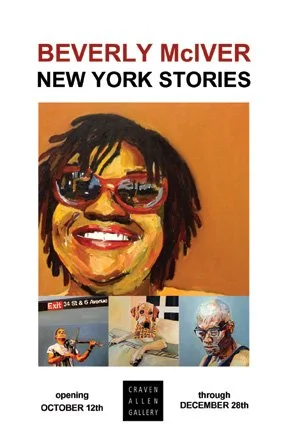
New York Stories
October 12 - December 28, 2013
Nationally acclaimed painter Beverly McIver returns to Craven Allen Gallery with “New York Stories”, new work painted in the city where she has been living in the past year. The new work features the dynamism of urban life, including paintings of street musicians and artists, including dancer Bill T. Jones, who is well-known to Durham ADF patrons, as well as her signature self-portraits, all of which come from her fellowship this year at the Marie Walsh Sharpe Foundation.
A film about McIver, “Raising Renee”, is 2013 Emmy Award nominee for Best Documentary. This spring she received Commendation Award at the Smithsonian National Portrait Gallery. The exhibition opens with a public reception for the artist on October 12th, from 5 to 7 pm, and continues through December 28.
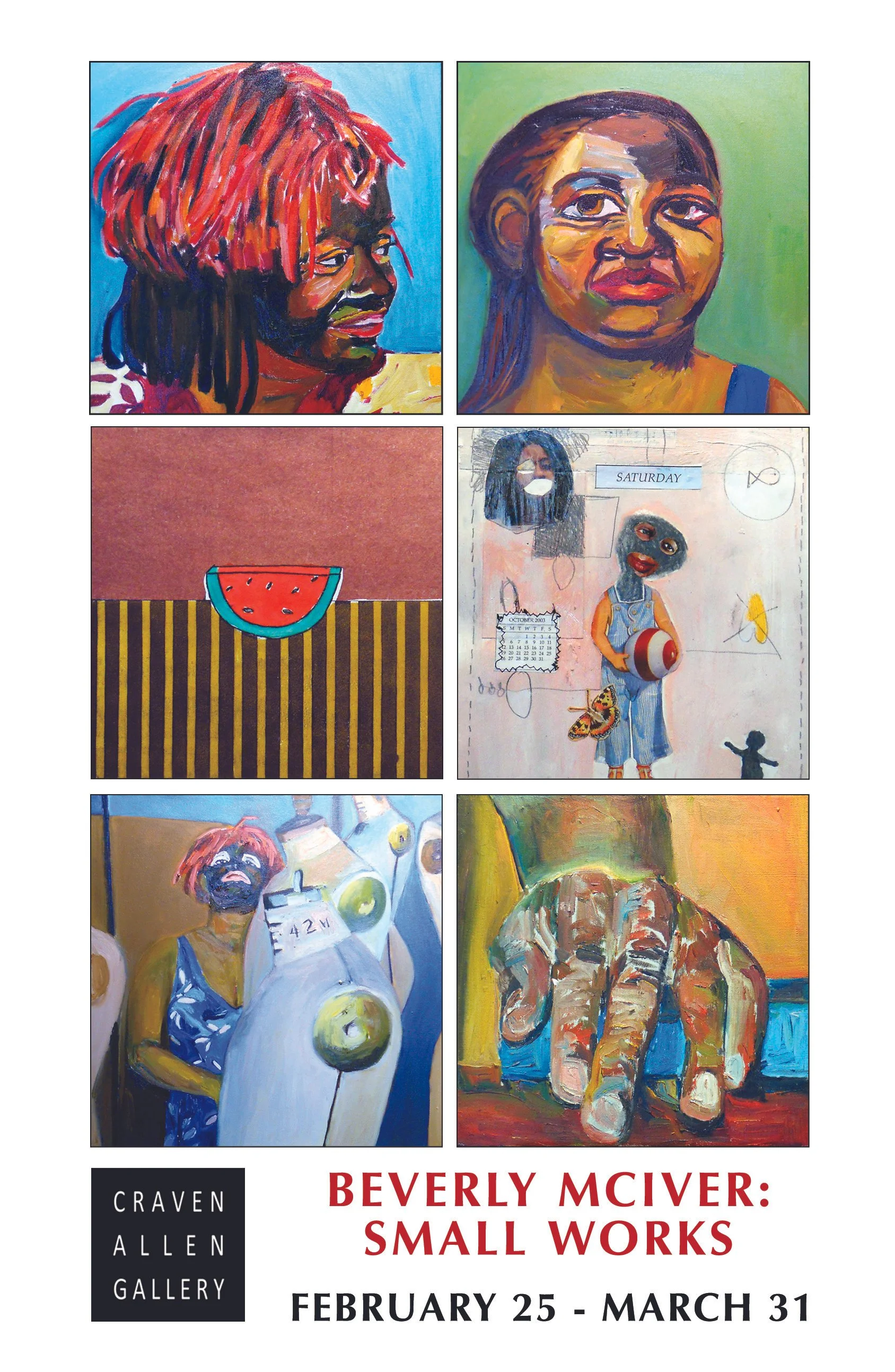
Small Works
February 25 - March 31, 2012
While viewers can see a major retrospective of Beverly McIver’s work at the North Carolina Museum of Art, Small Works offers a portrait of the artist working in a more intimate scale. The exhibition features mixed media works on paper and monoprints, as well as her signature oils on canvas. Text, sewing—a craft she learned from her mother—and collage figure prominently. Although small in size, the artworks in Small Works have the beauty and power of self-revelation so evident in her largest paintings. Also on view is a portrait of McIver by the renowned painter Philip Pearlstein.